
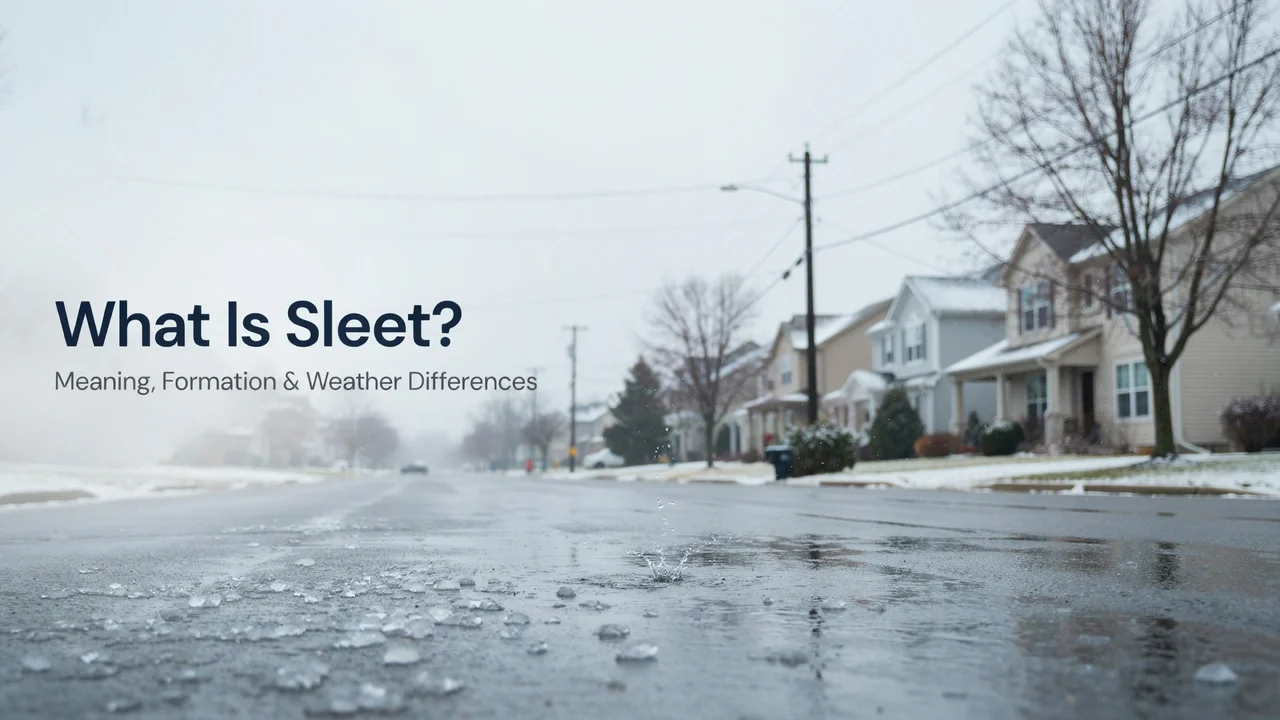
What Is Sleet? Meaning, Formation, Weather & How It Differs
Sleet is a type of frozen precipitation made of small ice pellets. In U.S. weather terminology, it usually forms when snow melts partly or completely in a layer of warmer air, then refreezes before reaching the ground.
Those pellets often bounce when they hit pavement, roofs, cars, or other hard surfaces. The National Weather Service uses sleet and ice pellets for the same precipitation type.
Sleet can make roads and sidewalks slippery, especially when it accumulates or becomes packed by traffic. It is different from snow, freezing rain, and hail because each forms through a different atmospheric process.
What Is Sleet in Weather?
In U.S. forecasts, sleet means ice pellets.
The National Weather Service defines sleet as pellets of ice made from frozen or mostly frozen raindrops, or from partially melted snowflakes that refreeze before reaching the ground.
Sleet usually develops when precipitation passes through both warm and cold layers of air.
A simple way to think about it is:
Snow melts, then freezes again before landing.
That is what separates sleet from freezing rain.
What Does Sleet Look Like?
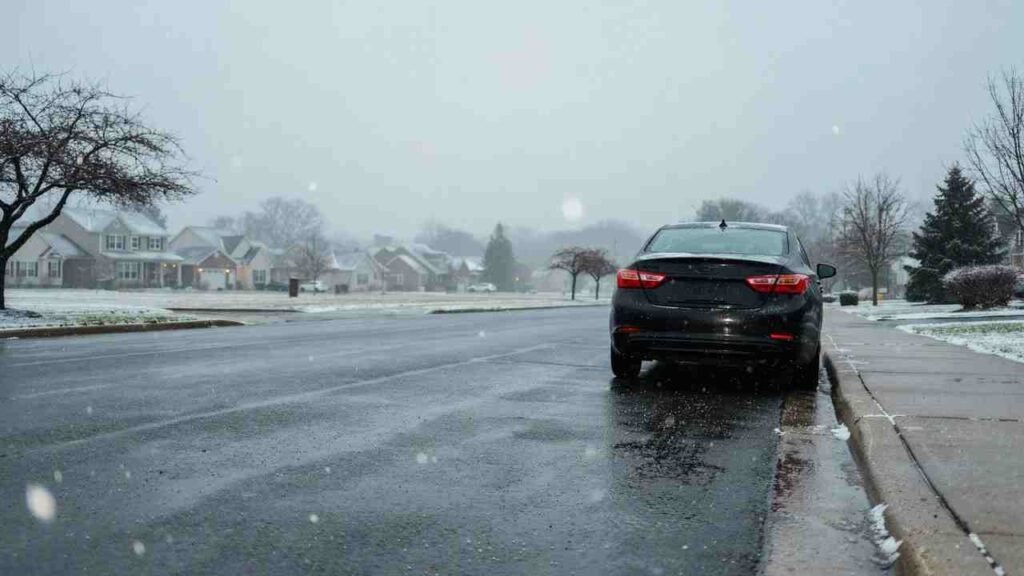
Sleet looks like small, hard or translucent pellets of ice.
You may notice it:
- Bouncing off roads or sidewalks
- Tapping against windows
- Rattling on a car roof
- Collecting in small piles
- Mixing with snow or rain
- Covering pavement with a grainy icy layer
Unlike snowflakes, sleet pellets do not have the soft, branching structure most people associate with snow.
How Does Sleet Form?
Sleet formation depends on the temperature at several levels of the atmosphere, not just the temperature you see on a surface thermometer.
A typical sleet setup works like this:
- Snow forms higher in the atmosphere.
- The snow falls into a layer of warmer air.
- The flakes partially or completely melt.
- The resulting liquid falls into a deeper layer of freezing air.
- The droplets refreeze before reaching the surface.
- They land as ice pellets.
The deeper cold layer near the ground is important.
It gives the melted precipitation enough time to freeze again.
Why Does Sleet Form Instead of Freezing Rain?
Sleet and freezing rain can begin with almost the same atmospheric setup.
Both may start as snow high above the ground. Both can pass through a warm layer where that snow melts.
The important difference is the depth of the cold air below the warm layer.
With sleet, the near-surface freezing layer is deep enough for the droplets to refreeze before landing.
With freezing rain, the freezing layer is shallower. The droplets remain liquid until they hit a cold surface and freeze there.
So:
- Deeper cold layer: favors sleet
- Shallower cold layer: favors freezing rain
For a detailed comparison, see our guide to Sleet vs Freezing Rain.
What Temperature Does Sleet Form At?
There is no single surface temperature that guarantees sleet.
Sleet formation depends on the vertical temperature profile through the atmosphere.
The important ingredients usually include:
- Cold air high enough for snow to form
- A warm layer that melts some or all of the snow
- A deeper below-freezing layer closer to the surface
This means seeing 30°F on your phone does not automatically tell you whether sleet will fall.
Is Sleet Frozen Rain?
That is a reasonable simple description, but the complete process is more specific.
Sleet is usually made from raindrops or partially melted snowflakes that refreeze before reaching the surface.
So sleet can be thought of as refrozen precipitation.
The timing matters because freezing rain stays liquid until after it reaches a cold surface.
What Does “Sleeting” Mean?
When someone says it is sleeting, they generally mean ice pellets are falling.
You may hear them tapping against a window or car more clearly than ordinary snowfall.
Sleet can fall alone or as part of mixed winter precipitation.
For example, a forecast may change through:
Snow → Sleet → Freezing Rain → Rain
That can happen as layers of warmer and colder air shift during a storm.
Sleet vs Snow
Sleet and snow both reach the ground frozen, but they are formed differently.
| Feature | Sleet | Snow |
|---|---|---|
| Form | Ice pellets | Snowflakes or ice crystals |
| Usually melts while falling | Yes | No |
| Refreezes before landing | Yes | Not required |
| Often bounces | Yes | No |
| Typical surface | Grainy icy layer | Snow accumulation |
| Sound on windows | Tapping or rattling | Usually softer |
Snow generally remains frozen from the cloud toward the surface when temperatures support it.
Sleet usually undergoes melting and refreezing before it reaches the ground.
Sleet vs Freezing Rain
This is one of the most common winter-weather comparisons.
The key distinction is when the precipitation freezes.
Sleet freezes before landing.
Freezing rain freezes after landing.
Freezing rain reaches the ground as liquid water and can create glaze ice on roads, trees, vehicles, and power lines. Sleet reaches the ground already frozen as separate pellets.
For more detail, read our complete Sleet vs Freezing Rain comparison.
Sleet vs Hail
Sleet and hail are both pieces of ice, but they should not be confused.
Sleet
Sleet is associated with winter precipitation.
It usually forms when melted or partially melted snow refreezes before reaching the ground.
Hail
Hail develops inside thunderstorms.
Strong updrafts repeatedly carry water droplets into freezing parts of a storm cloud, allowing pieces of ice to grow before falling.
A simple memory rule is:
- Sleet: winter ice pellets
- Hail: thunderstorm ice
Sleet vs Graupel
Graupel can also look like small white pellets, but it is different from sleet.
Graupel forms when supercooled water droplets freeze onto snow crystals.
It tends to be softer and more snow-like than hard sleet pellets.
Sleet pellets are generally harder and are created through melting followed by refreezing.
Sleet vs Ice
Sleet is a form of falling precipitation.
Ice is a much broader term.
Road ice, glaze ice, and frozen puddles may form after liquid water freezes on a surface.
Sleet is already frozen before it reaches the ground.
That distinction matters because a weather report saying sleet describes what is falling from the sky, while a report about icy roads describes the condition of the surface.
Can Sleet Accumulate?
Yes.
Sleet can accumulate on roads, lawns, roofs, and sidewalks.
Even a modest accumulation can make untreated roads slippery.
Repeated traffic may also pack the pellets into a harder layer.
Does Sleet Stick to Roads?
Sleet does not usually bond to pavement in the same way freezing rain does.
Instead, ice pellets collect on the surface.
They can:
- Roll or bounce initially
- Fill grooves in pavement
- Become packed by traffic
- Mix with snow
- Refreeze into a harder layer
- Reduce tire traction
This can make roads hazardous even though the surface looks different from smooth freezing-rain glaze.
Is Sleet Dangerous?
Sleet can be dangerous, particularly for travel.
Risk tends to increase when:
- Sleet falls heavily
- Temperatures remain below freezing
- Roads are untreated
- Pellets accumulate
- Traffic packs them down
- Snow or freezing rain is also present
The safest decision depends on actual road conditions, not the precipitation name alone.
Is It Safe to Drive in Sleet?
Sleet can reduce traction and make driving difficult.
A short period of light sleet on treated roads may have limited impact. Heavy accumulation on untreated pavement can be much more hazardous.
If sleet is falling, pay attention to:
- Local road reports
- Winter weather alerts
- Pavement temperature
- Bridges and overpasses
- Hills
- Residential streets
- Whether precipitation is changing to freezing rain
Do not assume roads are safe simply because snowfall totals are low.
Can Sleet Cause School Closures?
Yes.
Sleet can contribute to a school closure or delayed start when it makes roads, sidewalks, or bus routes unsafe.
There is no universal U.S. sleet amount that automatically cancels school.
Districts can consider:
- Road conditions
- Bus-route safety
- Accumulation
- Storm timing
- Temperature
- Bridges
- Hills
- Rural roads
- Sidewalks
- Road treatment
- Whether freezing rain or snow is also expected
A relatively small winter event can have a larger school impact if it occurs just before buses begin operating.
If sleet is in your local forecast, the Snow Day Predictor can provide an early estimate based on forecast weather conditions.
Your school or district remains the official source for closures and delays.
Why Sleet Can Matter Even When Little Snow Is Forecast
Families often focus on snowfall totals when checking whether school may close.
That can miss part of the risk.
A forecast could show little snow but still include several hours of sleet or freezing rain.
Sleet may:
- Cover untreated roads
- Make bridges slippery
- Affect bus routes
- Create difficult walking conditions
- Combine with snow or freezing rain
So the full precipitation forecast matters more than the snowfall number alone.
What Does Sleet Mean in a Weather Forecast?
When a U.S. forecast mentions sleet, it generally means ice pellets are expected.
You may also see related terms such as:
- Ice pellets
- Wintry mix
- Mixed precipitation
- Snow and sleet
- Freezing rain and sleet
When reading the forecast, check more than the precipitation type.
Also look at:
- When the sleet starts
- How long it may last
- Whether it will accumulate
- Surface temperature
- Expected road conditions
- Whether freezing rain may follow
- Whether a winter weather alert is active
The sequence of precipitation can matter as much as the amount.
What Is a Wintry Mix?
A wintry mix generally means more than one type of winter precipitation may occur.
That can include combinations of:
- Snow
- Sleet
- Freezing rain
- Rain
One location might receive snow while another nearby receives sleet or freezing rain.
The same place can also change from one type to another over several hours.
Can Sleet and Snow Fall Together?
Yes.
Sleet and snow can occur together when atmospheric temperatures are close to the boundary between the conditions that support snow and those that produce sleet.
You may see snowflakes mixed with bouncing ice pellets.
Road conditions can become more complicated when the two accumulate together.
Can Sleet and Freezing Rain Fall Together?
Yes.
A storm may produce sleet and freezing rain at the same time, or alternate between them as temperature layers change.
That can create a combination of loose pellets and bonded glaze ice on the surface.
What Is Sleet in the U.S. vs the UK?
This is an important terminology difference.
In the United States, sleet generally means ice pellets.
In the United Kingdom, sleet usually refers to a mixture of rain and snow or partially melted snow.
Because SnowDayCalculators.io primarily covers U.S. school-weather conditions, this guide uses the U.S. definition unless stated otherwise.
How to Identify Sleet Outside
If you are unsure whether sleet is falling, look and listen.
Signs of sleet include:
- Small pellets bouncing on pavement
- A noticeable tapping sound
- Tiny translucent pieces of ice
- Granular accumulation
- Pellets mixed with snow
- Less obvious glazing than freezing rain
If liquid drops are falling but immediately coating objects with smooth ice, you are more likely seeing freezing rain.
How Sleet Can Change During a Storm
Sleet may not last for the entire storm.
Changes in atmospheric temperature can cause precipitation to transition between types.
A common sequence might be:
Snow → Sleet → Freezing Rain → Rain
Later, colder air may move back in and reverse the process.
These transitions matter because the road hazard can change quickly.
A layer of sleet can be followed by glaze ice. Snow can then fall over that ice and hide the slippery surface underneath.
How to Check Snow Day Risk When Sleet Is Forecast
If sleet is expected before school, check the full weather picture.
Look at:
- Start time
- End time
- Expected accumulation
- Freezing rain risk
- Temperature
- Road treatment
- Local alerts
- School announcements
If you already know the expected ice, snow, temperature, and wind conditions, you can use the Snow Day Calculator to test how those conditions may affect an estimated closure chance.
The calculator is an estimate, not an official closure notice.
Frequently Asked Questions
What is sleet made of?
Sleet consists of small ice pellets made from frozen or mostly frozen raindrops, or refrozen partially melted snowflakes.
Is sleet rain or snow?
Sleet is frozen precipitation. It often begins as snow, melts partly or completely in warmer air, then refreezes before reaching the ground.
Is sleet frozen rain?
It can be described that way, although the more precise process often involves snow melting and then refreezing into ice pellets.
What does sleet look like?
Sleet usually looks like small translucent or whitish ice pellets. The pellets often bounce when they hit hard surfaces.
Does sleet bounce?
Yes. Bouncing on impact is one of the easiest ways to recognize sleet.
Does sleet stick to the ground?
It can accumulate on the ground, although it usually collects as pellets rather than bonding smoothly to the surface like freezing rain.
Can sleet accumulate?
Yes. Sleet can build up on roads, lawns, roofs, and sidewalks, especially during prolonged or heavy precipitation.
Is sleet dangerous to drive in?
It can be. Accumulating or packed sleet can reduce traction and make untreated roads slippery.
Can sleet close schools?
Yes. Sleet can contribute to closures or delays if road, bus-route, or walking conditions become unsafe.
Is sleet the same as freezing rain?
No. Sleet freezes before reaching the ground. Freezing rain remains liquid until it contacts a cold surface.
Is sleet the same as hail?
No. Sleet is a winter precipitation type. Hail forms inside thunderstorms through a different process.
Is sleet the same as snow?
No. Snow reaches the ground as snowflakes or ice crystals. Sleet reaches the ground as ice pellets.
What does sleeting mean?
Sleeting means sleet or ice pellets are falling.
What is sleet called on a weather report?
In U.S. weather terminology, you may see either sleet or ice pellets.
What Is Sleet? The Bottom Line
Sleet is frozen precipitation that reaches the ground as small ice pellets.
In a typical U.S. sleet event, snow falls through warmer air and melts, then enters a deeper freezing layer and refreezes before reaching the surface.
That makes sleet different from snow, which generally remains frozen while falling, and freezing rain, which stays liquid until it reaches a cold surface.
Sleet can bounce, accumulate, make roads slippery, and affect school transportation.
When sleet is in the forecast, pay attention to timing, accumulation, temperature, road conditions, and whether freezing rain or snow is also expected.
For school-day planning, use the Snow Day Predictor for a forecast-based estimate or the Snow Day Calculator to test specific winter weather conditions. Always rely on your school district for the official closure or delay decision.

One Comment