Does It Snow in Hawaii? Where, When and How Often It Snows
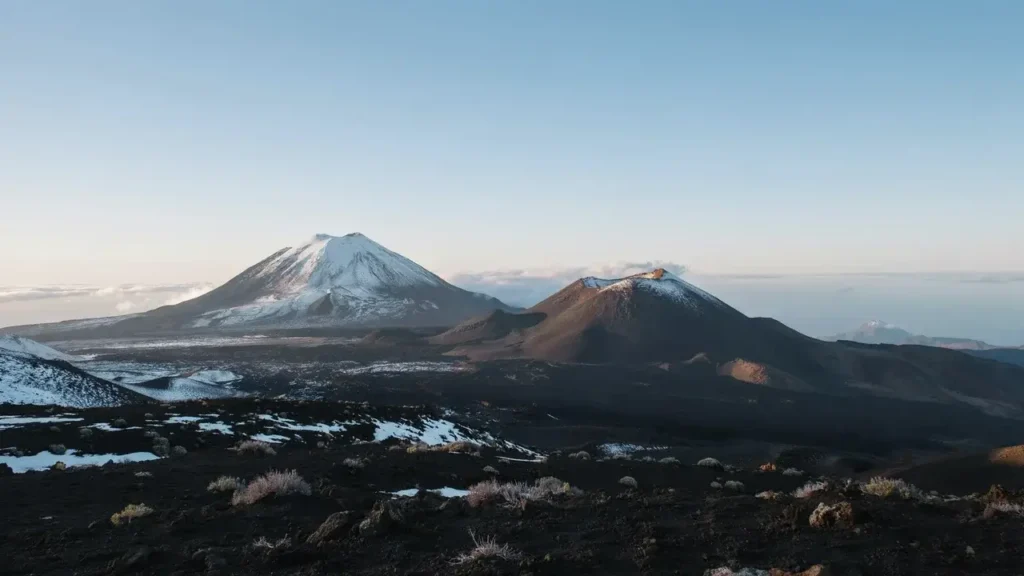
Yes, it does snow in Hawaii, but not where most visitors spend their vacations. Snow falls mainly on the highest volcanic summits, especially Mauna Kea and Mauna Loa on Hawaiʻi Island. Haleakalā on Maui can also receive snow, although much less often.
At sea level, Hawaii stays tropical. Beaches, Honolulu, and most populated areas do not normally see snow. The difference comes from elevation. Hawaii’s tallest mountains rise high enough for summit temperatures to drop below freezing during cold weather systems.
If you follow snow and winter weather across the United States, Snow Day Calculators also has weather tools and snow-related guides.
Does It Snow in Hawaii?
Yes. Snow in Hawaii is real and has been documented many times.
The National Weather Service says winter storm systems can bring snow to the state’s highest peaks, generally at elevations above about 11,000 feet. That mainly puts Mauna Kea and Mauna Loa within Hawaii’s regular summit snow zone. (weather.gov)
Haleakalā on Maui can also get snow, but its summit is lower and snowfall there is considerably less common.
The important point is that Hawaii’s snow is a high-elevation phenomenon. Warm beaches and snowy mountaintops can exist on the same island at the same time.
Where Does It Snow in Hawaii?
Most recurring snowfall is associated with three high volcanic summits.
| Mountain | Island | Summit Elevation | General Snow Pattern |
|---|---|---|---|
| Mauna Kea | Hawaiʻi Island | 13,803 ft | Most regular summit snowfall |
| Mauna Loa | Hawaiʻi Island | 13,679 ft | Regular snow during suitable winter storms |
| Haleakalā | Maui | 10,023 ft | Snow is much less frequent |
Snow amounts and duration can vary greatly between storms and from one winter to another.
Snow on Mauna Kea
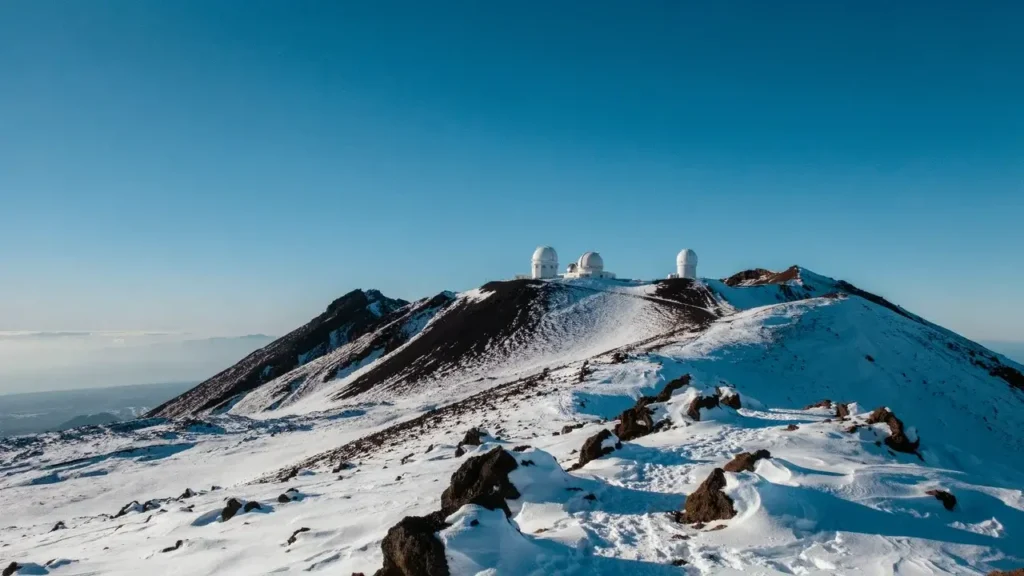
Mauna Kea is the highest point in Hawaii at 13,803 feet (4,207 m) above sea level. (usgs.gov). Its height makes it one of the main places where snow occurs in Hawaii.
During cold winter storms, summit temperatures can fall below freezing while moisture reaches the upper mountain. This can produce a snow-covered summit even while coastal communities remain warm.
Snow on Mauna Kea is not permanent. It can accumulate after a storm and then melt or disappear as weather conditions change.
Visitors should also avoid assuming that fresh snow means the summit is accessible. Ice, wind, road restrictions, and other hazardous conditions can affect access.
Snow on Mauna Loa
Mauna Loa also rises above 13,000 feet. The U.S. Geological Survey lists its summit at approximately 13,679 feet (4,169 m). (usgs.gov)
Like Mauna Kea, its upper elevations can receive snowfall when cold air and enough moisture arrive together.
The National Weather Service identifies Mauna Kea and Mauna Loa as the two Hawaiian peaks most regularly affected by summit snowstorms. (weather.gov)
Mauna Loa should not, however, be treated like a conventional snow-tourism destination. Its terrain, volcanic setting, weather, and access are very different from a mainland ski mountain.
Does Haleakalā Get Snow?
Yes, but snow on Haleakalā is much rarer.
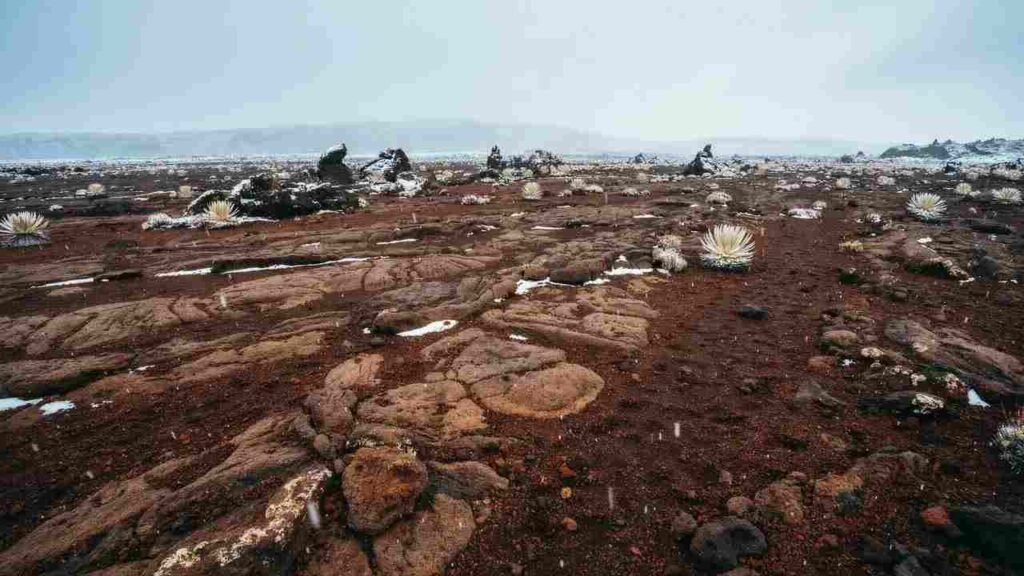
Haleakalā reaches 10,023 feet, and the National Park Service notes that summit temperatures can fall below freezing. (nps.gov)
The National Weather Service says snowfall near Haleakalā’s summit historically occurs roughly once every two to three years. (weather.gov)
This makes Haleakalā different from Mauna Kea and Mauna Loa. Snow can happen there, but travelers should not think of it as having a dependable winter snow season.
Why Does It Snow in Tropical Hawaii?
Hawaii’s tropical location does not prevent snow from forming at very high elevations.
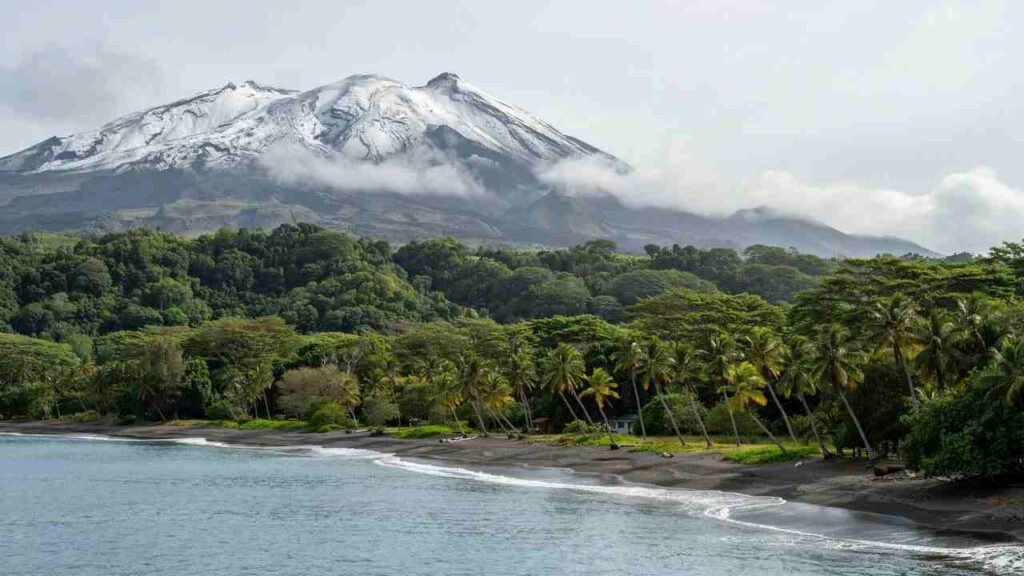
The main reason is altitude.
Mauna Kea and Mauna Loa rise more than 13,000 feet above sea level. Temperatures decrease as elevation rises, so summit weather can be dramatically colder than conditions at the beach.
For snow to fall, three ingredients need to come together:
- Cold enough air
- Moisture
- A weather system capable of producing precipitation
When moisture reaches the high summits during sufficiently cold conditions, precipitation can fall as snow instead of rain.
This creates one of Hawaii’s most striking weather contrasts. A person can experience warm tropical weather near the coast while snow covers a mountain summit far above.
When Does It Snow in Hawaii?
Snow can occur in Hawaii in any month, but it is most likely during the cooler part of the year.
The National Weather Service says summit snowfall is most likely from October through April. (weather.gov)
That does not mean snow is guaranteed throughout those months.
A particular winter may have:
- Several snow events
- One significant storm
- Brief summit snow
- Very little snow
Storm timing, temperature, and moisture all affect what happens.
This is why travelers should check current mountain conditions instead of assuming that visiting in January or February guarantees snow.
How Often Does It Snow in Hawaii?
There is no fixed number of snow days in Hawaii each year. Snowfall varies substantially from one winter to another.
The highest summits can receive snow in many winters, but snow cover may last only a short time after some storms. Other winters can produce repeated or longer-lasting events.
The National Weather Service also notes that routine snowfall measurements are not taken on the Hawaiian summits, which means precise annual snowfall averages should be treated cautiously.
This is one reason claims such as “Mauna Kea gets exactly X inches of snow every year” can be misleading.
A better way to understand Hawaiian snow is to think in terms of individual summit storms and periods of snow cover, rather than a predictable mainland-style snow season.
Does It Snow in Hawaii Every Year?
Snow appears on Hawaii’s highest peaks in many years, but the amount varies greatly. Mauna Kea and Mauna Loa are the most likely places to see recurring snow because both summits rise above 13,000 feet.
Some winters produce considerable summit snow, while others have much less. Haleakalā is different. Its lower summit means snowfall there is considerably less frequent.
So if someone asks whether it snows in Hawaii every year, the best answer is:
Snow commonly occurs on the highest Big Island summits in many winters, but it is not equally frequent on every mountain and is never guaranteed on a specific date.
Does It Snow on the Big Island of Hawaii?
Yes. The Big Island is the main place associated with snow in Hawaii.
Both of Hawaii’s two highest summits are located there:
- Mauna Kea
- Mauna Loa
That creates a dramatic climate contrast across Hawaiʻi Island. At low elevations, temperatures can remain warm while conditions thousands of feet higher are cold enough for snow.
This does not mean large parts of the Big Island become snowy. Snow is concentrated around the highest elevations.
Mauna Kea vs Mauna Loa for Snow
Both mountains can receive snow, but Mauna Kea receives more public attention because:
- It is Hawaii’s highest peak
- Its summit is associated with major astronomical observatories
- Summit snow is often photographed and reported
- Visitors frequently search for road and access conditions there
Mauna Loa also gets snow, but it is not generally approached as a casual snow-viewing destination.
Does It Snow in Maui?
Yes, but rarely.
The snow location on Maui is Haleakalā, which rises just over 10,000 feet.
Summit temperatures can fall below freezing, but Haleakalā does not receive snow as often as Mauna Kea or Mauna Loa.
For that reason, Maui visitors should not plan a winter vacation expecting snow. If it does happen, it is an unusual summit weather event rather than a dependable seasonal attraction.
Does It Snow in Honolulu or Oahu?
Normal snowfall does not occur in Honolulu or at typical low elevations on Oahu. Honolulu has a warm tropical climate and sits close to sea level.
When news reports say “it snowed in Hawaii,” they are usually referring to one of the state’s very high mountain summits, not Waikīkī, Honolulu, or the beaches.
That distinction matters because Hawaii’s weather changes dramatically with elevation.
Has It Ever Snowed in Hawaii?
Yes. Snow has been documented in Hawaii many times. It is not a recent weather anomaly.
Historical and modern observations have recorded snowfall on:
- Mauna Kea
- Mauna Loa
- Haleakalā
Historical scientific research has also documented rare reports associated with Hualālai.
However, today’s recurring snow activity is mainly associated with Mauna Kea and Mauna Loa, with Haleakalā experiencing much rarer events.
When Was the Last Time It Snowed in Hawaii?
The answer changes whenever another summit snow event occurs.
Because snowfall can happen periodically, putting a fixed “last snow date” into an evergreen article can quickly become outdated.
For the latest information, check:
- National Weather Service Honolulu
- Official summit weather reports
- Road status
- Summit webcams where available
- Current winter weather advisories
This is more reliable than relying on an old news article or social media photo.
Can Hawaii Have Snowstorms?
Yes, but Hawaiian snowstorms are primarily a high-summit weather event.
The National Weather Service says snowstorms affecting Mauna Kea and Mauna Loa can also include strong winds. In some cases, this can cause significant drifting snow and blizzard-like conditions.
That does not mean a statewide snowstorm blankets Hawaii.
Coastal communities may experience rain or completely different weather while dangerous winter conditions occur near the summits.
Can You Ski in Hawaii?
People have skied and snowboarded on Mauna Kea after suitable snowfall, but Hawaii is not a normal ski destination.
There are no conventional ski resorts on Mauna Kea.
That means you should not expect:
- Chairlifts
- Groomed ski runs
- Ski patrol
- Maintained trails
- Resort snowmaking
- Rental facilities on the mountain
The experience is completely different from skiing in California, Colorado, or Utah.
Summit access can also be affected by severe weather, road closures, ice, and high winds.
So while the answer to “can you snow ski in Hawaii?” is technically yes under suitable conditions, it is not a conventional recreational ski trip.
Can Tourists See Snow in Hawaii?
Sometimes, yes.
But seeing snow in Hawaii requires much more planning than visiting a regular mainland snow destination.
Snow can melt quickly, and a summit road may close during or after a storm.
Before trying to see snow, check:
- Current summit conditions
- Road closures
- Wind advisories
- Ice conditions
- Vehicle requirements
- Official access notices
Do not drive toward Mauna Kea simply because a photo of snow appeared online.
That image may be several hours or days old, and conditions can change quickly.
Is It Safe to Visit Mauna Kea After Snow?
Conditions near the Mauna Kea summit can become hazardous.
Potential problems include:
- Ice
- Snow-covered roads
- High winds
- Reduced visibility
- Extremely cold temperatures
- High altitude
Mauna Kea’s summit rises above 13,800 feet, so altitude is another important issue.
A person coming directly from sea level can feel the effects of high elevation even when the weather is clear.
Always follow official road and access restrictions.
If authorities close the summit road during hazardous conditions, snow on the mountain does not make it safe to continue.
Why Does Snow in Hawaii Melt So Quickly?
Snow on Hawaiian summits is often temporary.
Several factors can shorten its lifespan:
- Strong solar radiation
- Changing air temperatures
- Limited snow depth during some storms
- Exposed volcanic terrain
- Warmer weather returning after a storm
That is why Mauna Kea can look heavily snow-covered after one storm and much less snowy only a short time later.
This also explains why planning a trip several weeks in advance specifically to see summit snow can be difficult.
Can It Snow in Hawaii in Summer?
Yes, but summer snow is unusual. The National Weather Service says snow can occur in any month, although it is most likely between October and April.
That means a sufficiently cold weather system can occasionally produce high-elevation snow outside the usual winter period.
Summer snowfall should not be interpreted as a normal summer snow season.
Does It Snow in Hawaii in December?
Yes, December falls within the part of the year when snow is more likely on Hawaii’s highest summits.
Mauna Kea and Mauna Loa can receive December snowfall if temperatures and moisture conditions are favorable.
However, there is no guarantee that snow will be present on a particular December day. Anyone planning to see snow should check conditions shortly before visiting.
Is There Snow in Hawaii Right Now?
That depends on recent weather. Snow may be visible after a winter storm and then melt during warmer or sunnier conditions.
To check whether Hawaii has snow right now, use:
- National Weather Service Honolulu forecasts
- Summit weather information
- Official road status
- Recent webcams
- Winter weather advisories
Avoid assuming that a viral image or older news report reflects current conditions.
Hawaii Snow and School Closures
High-elevation snow on Mauna Kea does not automatically mean schools across Hawaii will close. School disruptions depend on local weather and safety conditions where students actually live and travel.
Factors can include:
- Flooding
- High winds
- Road closures
- Severe storms
- Local hazards
If you are following winter weather because it may affect school schedules, you can use the Snow Day Predictor alongside official forecasts and school announcements.
The final closure decision always comes from the relevant school or district authority.
Hawaii Snow Facts at a Glance
| Question | Answer |
|---|---|
| Does it snow in Hawaii? | Yes, mainly on the highest summits |
| Where does it snow most often? | Mauna Kea and Mauna Loa |
| Does Maui get snow? | Yes, rarely on Haleakalā |
| Does Honolulu get snow? | Not under normal conditions |
| When is snow most likely? | October through April |
| Can it snow in summer? | Yes, but rarely |
| Can you ski in Hawaii? | Informally, but there are no ski resorts |
| Is summit snow permanent? | No |
| Is snow guaranteed every winter? | No |
FAQs About Snow in Hawaii
Does Hawaii get snow every year?
Snow occurs on the highest Big Island summits in many winters, but the amount and duration vary from year to year. Snow is much less frequent on Haleakalā.
How often does it snow in Hawaii?
There is no fixed number of annual snow days. Mauna Kea and Mauna Loa receive summit snow in many winters, while Haleakalā gets snow much less often.
Where in Hawaii does it snow?
Snow mainly occurs on Mauna Kea and Mauna Loa on Hawaiʻi Island. Haleakalā on Maui can also receive occasional snow.
Does Mauna Kea always have snow?
No. Snow on Mauna Kea is temporary and depends on recent storms and summit temperatures.
Does Mauna Loa get snow?
Yes. Its summit is high enough for snowfall during sufficiently cold and moist weather systems.
Does Haleakalā get snow?
Yes, but rarely. The National Weather Service says summit snow historically occurs roughly once every two to three years.
Does it snow in Hawaii in December?
Yes, it can. December falls within the October to April period when summit snowfall is more likely.
Can it snow in Hawaii in July?
It is possible but unusual. Snow can technically occur in any month at the highest elevations.
Does it snow on Hawaii beaches?
No under normal weather conditions. Hawaiian snow is associated with very high mountain elevations, not beaches.
Has it ever snowed in Honolulu?
Honolulu does not experience normal snowfall. Hawaii’s documented snow events occur at high elevations, far above Honolulu.
Can you ski on Mauna Kea?
People have skied or snowboarded there after snowfall, but there are no lifts, groomed runs, ski patrol, or conventional resort facilities.
What is the snowiest mountain in Hawaii?
Mauna Kea and Mauna Loa are the state’s two main recurring snow locations. A simple permanent “snowiest” ranking is difficult because routine summit snowfall measurements are limited.
Understanding Snow in Hawaii
So, does it snow in Hawaii? Yes, but almost entirely at high elevations.
Mauna Kea and Mauna Loa are the main places where snow occurs, while Haleakalā sees it much less often. Hawaii’s tropical coastline can remain warm even when the highest summits are covered in snow.
Snowfall is most likely from October through April, but no particular day is guaranteed. If you want to see snow, check official summit weather, road access, and current conditions shortly before making the trip.