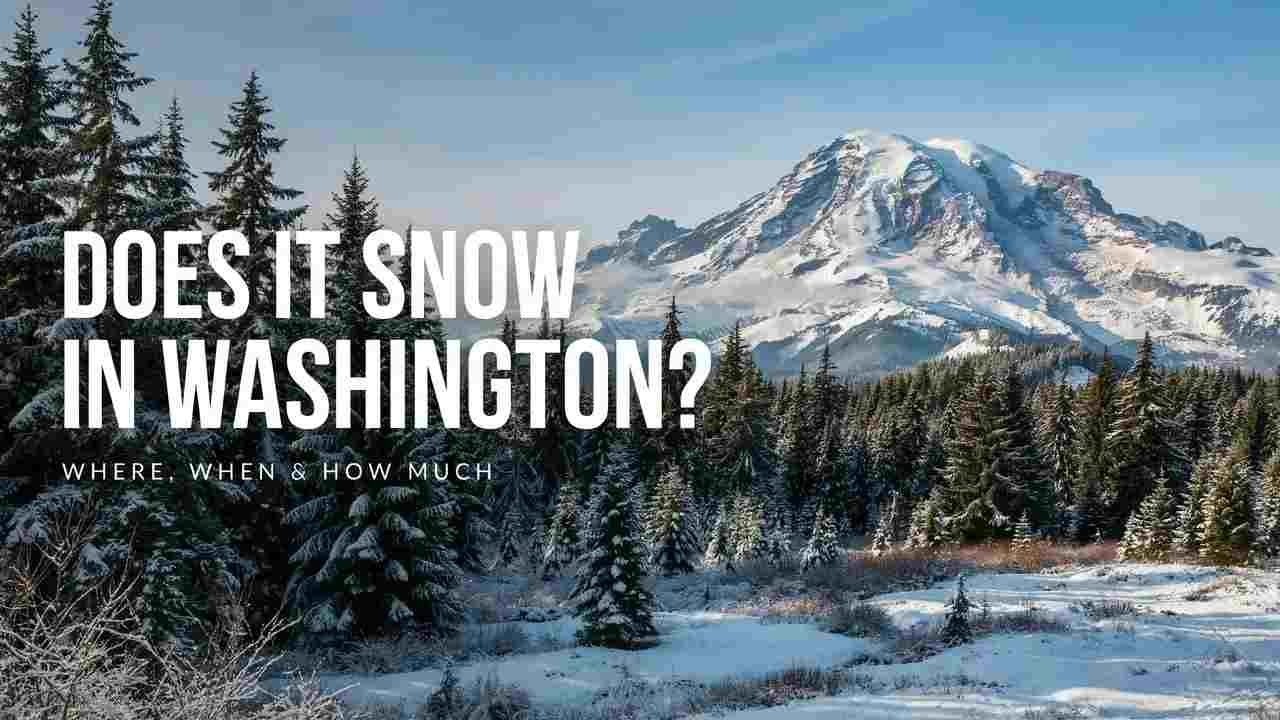
Does It Snow in Washington State? Where, When and How Much Snow Falls
Yes, it snows in Washington State, but snowfall varies enormously depending on where you are.
Seattle and much of the Puget Sound lowlands receive occasional winter snow, while Spokane and other parts of Eastern Washington get snow much more regularly. The Cascade Mountains receive some of the heaviest snowfall in the state, and high-elevation places such as Paradise at Mount Rainier can accumulate hundreds of inches in a single winter season.
This guide covers Washington State in the Pacific Northwest, not Washington, D.C.
The most important thing to understand is that Washington has several very different winter climates. Elevation, distance from the Pacific Ocean, and the Cascade Range all have a major effect on whether winter precipitation falls as rain or snow.
If winter weather may affect school schedules, you can also use the Snow Day Predictor alongside official weather forecasts and district announcements.
Does It Snow in Washington State?
Yes. Snow falls across Washington State every winter.
However, the amount varies sharply between the western lowlands, mountain ranges, and Eastern Washington.
Washington includes:
- Pacific coastline
- Puget Sound lowlands
- Olympic Mountains
- Cascade Mountains
- Columbia Basin
- Eastern Washington valleys and plateaus
- Northeastern mountain areas
A winter storm can bring rain to Seattle, heavy snow to Snoqualmie Pass, and persistent snow to Spokane at the same time.
That is why a single statewide snowfall average is not very useful.
Where Does It Snow in Washington State?
Snow is most dependable in the Cascade Mountains and many parts of Eastern Washington.
Western lowland cities such as Seattle, Tacoma, Olympia, and Vancouver can also receive snow, but winter rain is much more common.
| Washington Region | Typical Winter Snow Pattern |
|---|---|
| Cascade Mountains | Heavy, dependable mountain snow |
| Eastern Washington | Regular winter snowfall |
| Puget Sound lowlands | Occasional lowland snow |
| Olympic Mountains | Heavy snow at higher elevations |
| Pacific Coast | Snow is uncommon near sea level |
| Columbia Basin | Cold winters with variable snowfall |
Cascade Mountains
The Cascade Range is Washington’s main mountain snow zone.
Winter storms from the Pacific bring moisture inland, and higher elevations are cold enough for much of that precipitation to fall as snow.
Important snowy areas include:
- Mount Rainier
- Mount Baker
- Stevens Pass
- Snoqualmie Pass
- White Pass
- Crystal Mountain area
- North Cascades
Snow can begin in fall and remain well into spring at higher elevations.
The difference between mountain snow and nearby lowland weather can be dramatic. Seattle may be receiving cold rain while deep snow accumulates in the Cascades.
Eastern Washington
Eastern Washington has colder and more continental winters than most of the Puget Sound region.
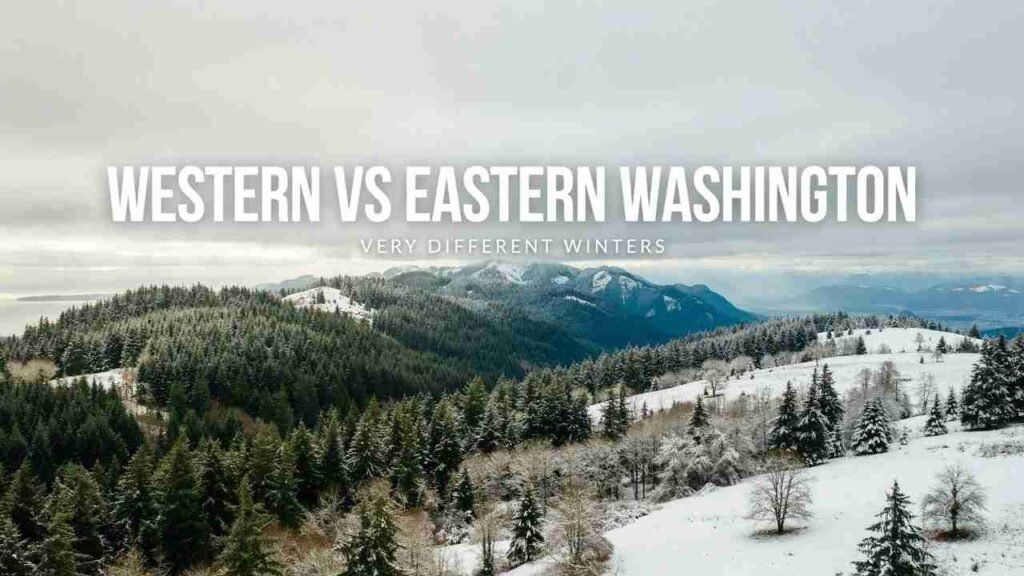
Snow is common in places such as Spokane and other inland communities.
The region includes:
- Spokane
- Pullman
- Wenatchee
- Omak
- Colville
- Northeastern Washington
- Higher terrain near the Idaho border
Snowfall varies by elevation and location, but winter snow generally occurs more regularly than in Seattle or Tacoma.
Spokane is one of the clearest examples of the east-west difference in Washington’s winter climate.
Western Washington Lowlands
Western Washington includes Seattle, Tacoma, Olympia, Everett, Bellevue, Vancouver, and other lower-elevation communities west of the Cascades.
Winter here is often wet but not consistently snowy.
The Pacific Ocean helps moderate temperatures, so many winter storms produce rain in the lowlands while mountains receive snow.
Snow can still occur when sufficiently cold air reaches Western Washington at the same time moisture is present.
These events may cause significant travel disruption because persistent lowland snow is less common than in Eastern Washington.
Olympic Mountains
The Olympic Mountains receive heavy winter precipitation, and much of it falls as snow at higher elevations.
Lower coastal and Puget Sound communities surrounding the Olympics are generally much milder.
This creates another strong elevation contrast.
A nearby town may receive rain while high mountain terrain is deeply snow-covered.
Washington Coast
Yes, snow is possible along the Washington coast, but it is uncommon near sea level.
Winter precipitation normally falls as rain because of the strong marine influence of the Pacific Ocean.
Rare cold outbreaks can still produce coastal snow.
When Does It Snow in Washington State?
Washington’s snow season depends heavily on elevation and region.
Western Washington Lowlands
Seattle, Tacoma, and Olympia are most likely to see snow during:
- December
- January
- February
Occasional November or March snow is also possible.
Eastern Washington
Snow can begin earlier and remain later in Eastern Washington.
November through March is a common period for winter snowfall, although conditions vary from year to year.
Cascade Mountains
High-elevation snow can begin in fall and continue well into spring.
At the highest snowy locations, deep snowpack may remain into early summer.
Does It Snow in Washington in November?
Yes.
November snowfall is possible in Eastern Washington and increasingly common in the mountains.
Western lowland snow is less dependable in November.
Does It Snow in Washington in December?
Yes.
December is one of the main winter snowfall months across Washington.
Mountain snowfall is well established by this time, and lowland snow becomes more likely.
Does It Snow in Washington in January?
Yes.
January is part of the core snow season.
Cold weather can produce snow in Western Washington, while Eastern Washington and the mountains commonly experience more persistent winter conditions.
Does It Snow in Washington in February?
Yes.
February is another important snowfall month, including in the Seattle area.
At Seattle-Tacoma International Airport, February has the highest monthly 1991 to 2020 normal snowfall at about 2.2 inches.
Does It Snow in Washington in March?
Yes.
March snow remains possible across Eastern Washington and mountain areas.
Seattle’s 1991 to 2020 normal March snowfall is about 0.4 inch, so lowland snow is less common by this point.
Can It Snow in Washington in April or Later?
Yes, especially in the mountains.
Lowland April snow is uncommon, but higher parts of the Cascades can continue receiving snow well into spring.
At Mount Rainier, deep winter snow can remain into June or July around Paradise.
How Much Snow Does Washington State Get?
There is no useful single snowfall number for the entire state.
Washington’s snowfall ranges from relatively small annual amounts in the Puget Sound lowlands to hundreds of inches in high mountain areas.
A better comparison is:
| Location | Typical Annual Snowfall |
|---|---|
| Seattle-Tacoma International Airport | About 6.3 inches |
| Spokane | Around 40+ inches in a typical year |
| Paradise, Mount Rainier | Roughly 637 to 640 inches |
| Western Washington lowlands | Generally occasional snowfall |
| Cascade Mountains | Heavy seasonal snowfall |
| Eastern Washington | Much snowier than most western lowlands |
These figures represent long-term averages or normals for specific locations.
They should not be interpreted as guaranteed snowfall totals for every winter.
Does It Snow in Seattle, Washington?
Yes, Seattle does get snow, but snowfall is irregular.
NOAA’s 1991 to 2020 climate normals for Seattle-Tacoma International Airport show an average annual snowfall of approximately 6.3 inches.
The monthly normals are:
| Month | Normal Snowfall |
|---|---|
| January | 1.8 inches |
| February | 2.2 inches |
| March | 0.4 inch |
| November | 0.2 inch |
| December | 1.7 inches |
| Annual | 6.3 inches |
These numbers do not mean Seattle receives exactly 6.3 inches every winter.
Some winters produce little measurable snow, while occasional storms can bring much larger accumulations.
Seattle snowfall is especially sensitive to temperature because winter storms frequently arrive with plenty of moisture but temperatures remain warm enough for rain.
Snow becomes more likely when cold continental air reaches the Puget Sound region at the same time a moist weather system arrives.
Does It Snow in Spokane, Washington?
Yes. Spokane receives snow much more regularly than Seattle.
Spokane’s inland location and colder winter climate make snowfall a normal part of the season.
Long-term National Weather Service climate records show average annual snowfall around the mid-40-inch range at Spokane International Airport.
Snow frequently falls from late fall through winter and into early spring.
Persistent snow cover is also more common than in Seattle.
Seattle vs Spokane Snowfall
Seattle and Spokane provide one of the clearest examples of Washington’s climate contrast.
| City | Snow Pattern |
|---|---|
| Seattle | About 6.3 inches normal annual snowfall |
| Spokane | Around mid-40 inches normal annual snowfall |
| Main reason | Spokane is colder and more continental |
Seattle is strongly influenced by the Pacific Ocean.
Spokane is farther inland and east of the Cascades, so winter temperatures are generally colder.
This means snow that melts quickly or falls as rain in Seattle may remain on the ground much longer in Spokane.
Does It Snow in Tacoma and Olympia?
Yes.
Both Tacoma and Olympia can receive winter snow.
Like Seattle, they are part of Western Washington’s lowland climate, where rain is much more common than persistent snow.
Cold winter storms can still produce:
- Snow
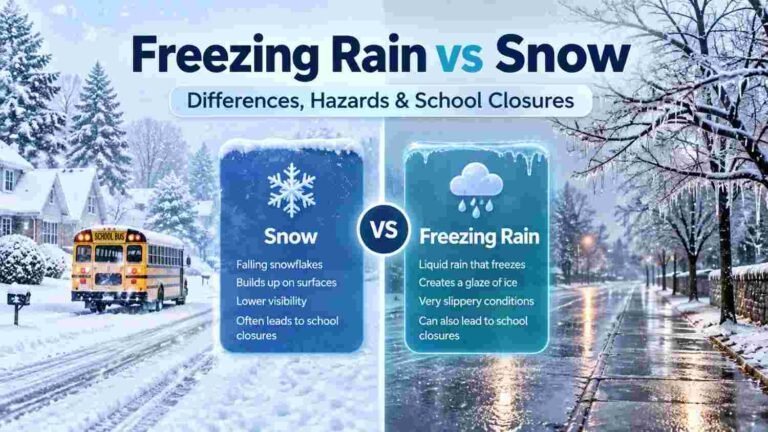
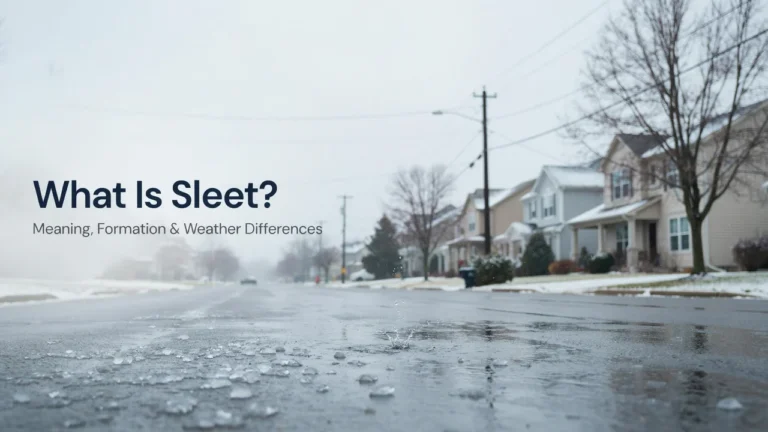
- Freezing rain
- Ice
- Slushy road conditions
Snowfall amounts vary significantly from one storm to another.
Does It Snow in Bellingham?
Yes.
Bellingham can receive winter snowfall.
Its location in Northwestern Washington makes it particularly sensitive to cold air moving south from British Columbia.
Some winter weather setups can produce snow even when locations farther south around Puget Sound remain warmer.
Does It Snow in Vancouver, Washington?
Yes.
Vancouver, Washington can receive occasional snow during winter.
However, rain is much more common at low elevations.
Snowfall is generally less dependable than in Eastern Washington or the Cascades.
Vancouver should not be confused with Vancouver, British Columbia.
Where Does Washington Get the Most Snow?
The heaviest snowfall generally occurs in the Cascade Mountains.
One of the most famous examples is Paradise at Mount Rainier National Park.
Paradise receives roughly 637 to 640 inches of snow per year on average, depending on the current National Park Service calculation and data update.
That equals more than 53 feet of snow annually.
Other very snowy areas include:
- Mount Baker region
- Stevens Pass
- Snoqualmie Pass
- Crystal Mountain area
- White Pass
- North Cascades
The exact snowiest location depends on the measurement period and whether the comparison uses annual snowfall, maximum snow depth, or snow water equivalent.
How Much Snow Does Mount Rainier Get?
Mount Rainier receives enormous amounts of mountain snow.
At Paradise, around 5,400 feet in elevation, the National Park Service currently reports average annual snowfall of roughly 637 to 640 inches.
The site has also recorded extraordinary winters.
During the 1971 to 1972 snow season, Paradise measured 1,122 inches, or 93.5 feet, of snowfall.
That historic total was an extreme event and should not be treated as a normal winter.
Snowfall measurements refer specifically to the Paradise weather station, not the entire national park.
Why Does Snowfall Vary So Much Across Washington?
Washington’s geography creates major differences in winter weather.
Pacific Ocean Influence
The Pacific Ocean keeps much of Western Washington relatively mild.
This is one reason Seattle often gets rain during winter storms that produce snow farther inland or at higher elevations.
Cascade Mountains
The Cascades force moist Pacific air upward.
As the air rises and cools, precipitation increases.
In winter, much of this mountain precipitation falls as snow.
Elevation
Higher elevations are colder.
A storm that produces rain in Seattle may produce heavy snow at Snoqualmie Pass.
Rain Shadow
Eastern Washington lies partly in the rain shadow of the Cascades.
The region is generally drier than western mountain slopes, but colder temperatures make winter snowfall more persistent in many inland communities.
Continental Cold Air
Eastern and Northeastern Washington are more exposed to cold continental air.
This contributes to colder winters and more reliable lowland snow compared with the Puget Sound region.
What Does Snow Level Mean in Washington?
Weather forecasts in Washington often mention the snow level.
The snow level is the approximate elevation where precipitation changes from mostly rain to mostly snow.
For example, a forecast might call for rain in Seattle but snow above 2,500 feet in the Cascades.
Snow level is especially important for:
- Snoqualmie Pass
- Stevens Pass
- White Pass
- Mount Baker Highway
- Mount Rainier
- Ski areas
- Winter hikers
The snow level changes from storm to storm.
There is no permanent Washington snow level.
What Is Washington Snowpack?
Snowpack is the accumulated snow that remains on the ground, particularly in mountain areas.
It is different from a single snowfall event.
Washington’s mountain snowpack is important because it stores water during winter and releases water during spring and summer melt.
This contributes to:
- Rivers
- Reservoirs
- Irrigation
- Water supply
- Hydropower
- Ecosystems
The USDA Natural Resources Conservation Service monitors Washington snowpack through snow courses and automated SNOTEL stations.
What Is Snow Water Equivalent?
Snow water equivalent, or SWE, estimates how much water is stored in the snowpack.
Two locations can have the same snow depth but contain different amounts of water because snow density varies.
SWE is therefore especially important for water supply forecasting.
Is There Snow in Washington Right Now?
Current snow conditions depend on elevation, location, and recent weather.
This guide covers typical Washington snowfall patterns, not live weather.
For current conditions, check:
- National Weather Service forecasts
- NRCS Washington Snow Survey
- Washington State Department of Transportation pass reports
- National Park Service alerts
- Official ski-area snow reports
For current mountain travel, check the exact pass or destination rather than relying on a statewide forecast.
How to Check Washington Snow and Snowpack
The most useful official resources include:
National Weather Service
Use NWS forecasts for current snowfall, winter storm warnings, snow levels, and weather alerts.
NRCS Washington Snow Survey
NRCS provides:
- SNOTEL observations
- Snow depth
- Snow water equivalent
- Basin snowpack information
- Water supply forecasts
Washington State Department of Transportation
WSDOT provides road and mountain-pass conditions, including:
- Snoqualmie Pass
- Stevens Pass
- White Pass
- Blewett Pass
- Other winter highways
Driving in Washington Snow
Winter driving can become difficult quickly, especially across mountain passes.
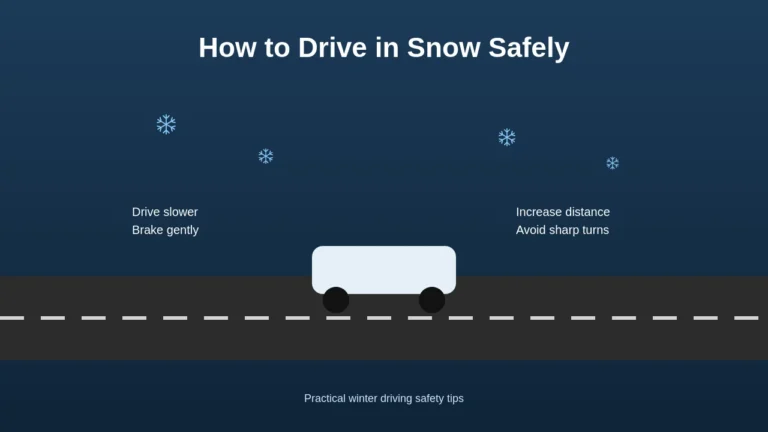
Before traveling:
- Check WSDOT pass conditions.
- Carry tire chains when heading into mountain areas.
- Follow posted traction requirements.
- Slow down on snow and ice.
- Leave extra stopping distance.
- Watch for black ice.
- Keep emergency supplies in the vehicle.
Washington can require chains during severe winter conditions.
Even four-wheel-drive and all-wheel-drive vehicles may be required to install chains when signs indicate chains required on all vehicles.
Studded tires are generally legal in Washington from November 1 through March 31, but they do not replace chains when chains are required.
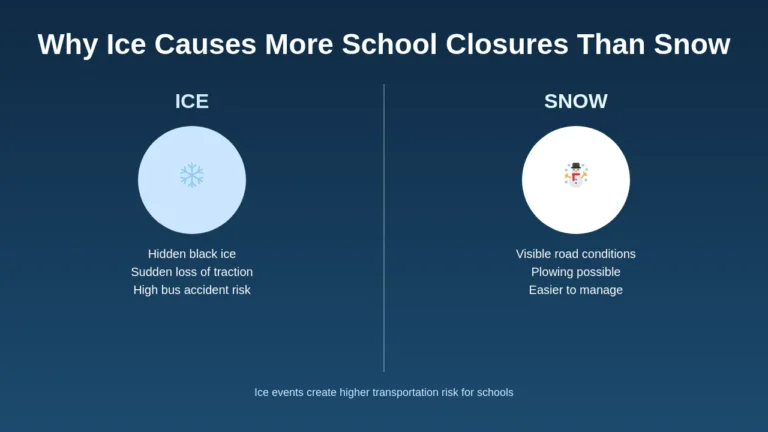
Washington Snow and School Closures
Snow can cause school delays or closures, particularly in Western Washington where persistent snow is less common.
Schools may consider:
- Road conditions
- Bus routes
- Ice
- Snow accumulation
- Forecast temperatures
- Timing of the storm
- Road-clearing capacity
The same snowfall amount may have different effects in Seattle and Spokane.
A few inches of snow can cause major disruption in some Western Washington communities while being more routine in parts of Eastern Washington.
If an incoming storm could affect school schedules, use the Snow Day Predictor together with official forecasts and school-district announcements.
The school or district makes the final closure decision.
For more snow-related tools and weather guides, visit Snow Day Calculators.
Washington Snow Facts at a Glance
| Question | Short Answer |
|---|---|
| Does Washington State get snow? | Yes |
| Does Seattle get snow? | Yes, but irregularly |
| Seattle normal annual snowfall | About 6.3 inches |
| Does Spokane get snow? | Yes, regularly |
| Spokane normal annual snowfall | Around the mid-40-inch range |
| Where is snow most dependable? | Cascade Mountains |
| How much snow does Paradise get? | Roughly 637 to 640 inches annually |
| Does Western Washington get snow? | Yes, but rain is more common in the lowlands |
| Does Eastern Washington get snow? | Yes, regularly in many areas |
| Can mountain snow remain into summer? | Yes, at high elevations |
| Does Washington monitor snowpack? | Yes, through NRCS |
FAQs About Snow in Washington State
Does Washington State get a lot of snow?
Some parts do.
The Cascades receive extremely heavy snowfall, while Seattle and other western lowland cities receive much less.
How often does it snow in Washington?
That depends on location.
Mountain and Eastern Washington locations experience snow much more frequently than Western Washington lowlands.
When does snow start in Washington State?
High mountain snow can begin during fall.
Lowland communities are more likely to see snow during December, January, and February.
Does it snow everywhere in Washington?
Snow is possible across much of the state, but it is not equally common everywhere.
The Pacific coast and low-elevation Puget Sound region receive much less snow than the Cascades or many areas east of the mountains.
Does Seattle get a lot of snow?
No, not compared with Eastern Washington or the mountains.
Seattle-Tacoma International Airport’s 1991 to 2020 normal annual snowfall is about 6.3 inches.
Does Spokane get more snow than Seattle?
Yes.
Spokane’s long-term annual snowfall is several times greater than Seattle’s because Spokane has a colder inland winter climate.
Does Tacoma get snow?
Yes.
Tacoma can receive occasional winter snowfall, although rain is more common.
Does Olympia get snow?
Yes.
Olympia receives occasional winter snow, but persistent seasonal snow cover is not typical.
Does Bellingham get snow?
Yes.
Bellingham can receive snow during winter, especially when cold air moves south from British Columbia.
Does Vancouver, Washington get snow?
Yes.
Vancouver can receive occasional snow, but low-elevation winter rain is much more common.
Does Washington get snow in December?
Yes.
December is one of the main snow months across the state.
Does Washington get snow in March?
Yes.
March snow remains possible in Eastern Washington and the mountains, while lowland Western Washington snow becomes less common.
Where can you reliably find snow in Washington?
The Cascade Mountains are generally the best place to find dependable winter snow.
Areas around Mount Rainier, Mount Baker, Stevens Pass, Snoqualmie Pass, and White Pass commonly have seasonal snow.
Is Washington snowpack the same as snowfall?
No.
Snowfall measures new snow that falls during a specific period.
Snowpack refers to snow that accumulates and remains on the ground.
Is Washington, D.C. included in this guide?
No.
This article covers Washington State in the Pacific Northwest.
Understanding Washington’s Snow Season
So, does it snow in Washington State? Yes, but the answer depends strongly on where you are.
Seattle and other Puget Sound communities receive occasional snow, Spokane has a much snowier inland climate, and the Cascade Mountains can accumulate extraordinary amounts of snow each winter.
The contrast is dramatic. Seattle-Tacoma International Airport averages about 6.3 inches annually, Spokane receives several times more, and Paradise at Mount Rainier receives more than 50 feet of snow in an average year.
For winter travel, elevation and location matter more than a statewide snowfall average.
Check the latest National Weather Service forecast, NRCS snowpack information, and WSDOT road conditions before traveling into snowy areas.
Sources
- NOAA National Centers for Environmental Information, Seattle-Tacoma International Airport 1991 to 2020 Climate Normals
- National Weather Service Spokane climate records
- National Park Service, Mount Rainier National Park
- USDA Natural Resources Conservation Service, Washington Snow Survey
- Washington State Department of Transportation winter driving and pass information