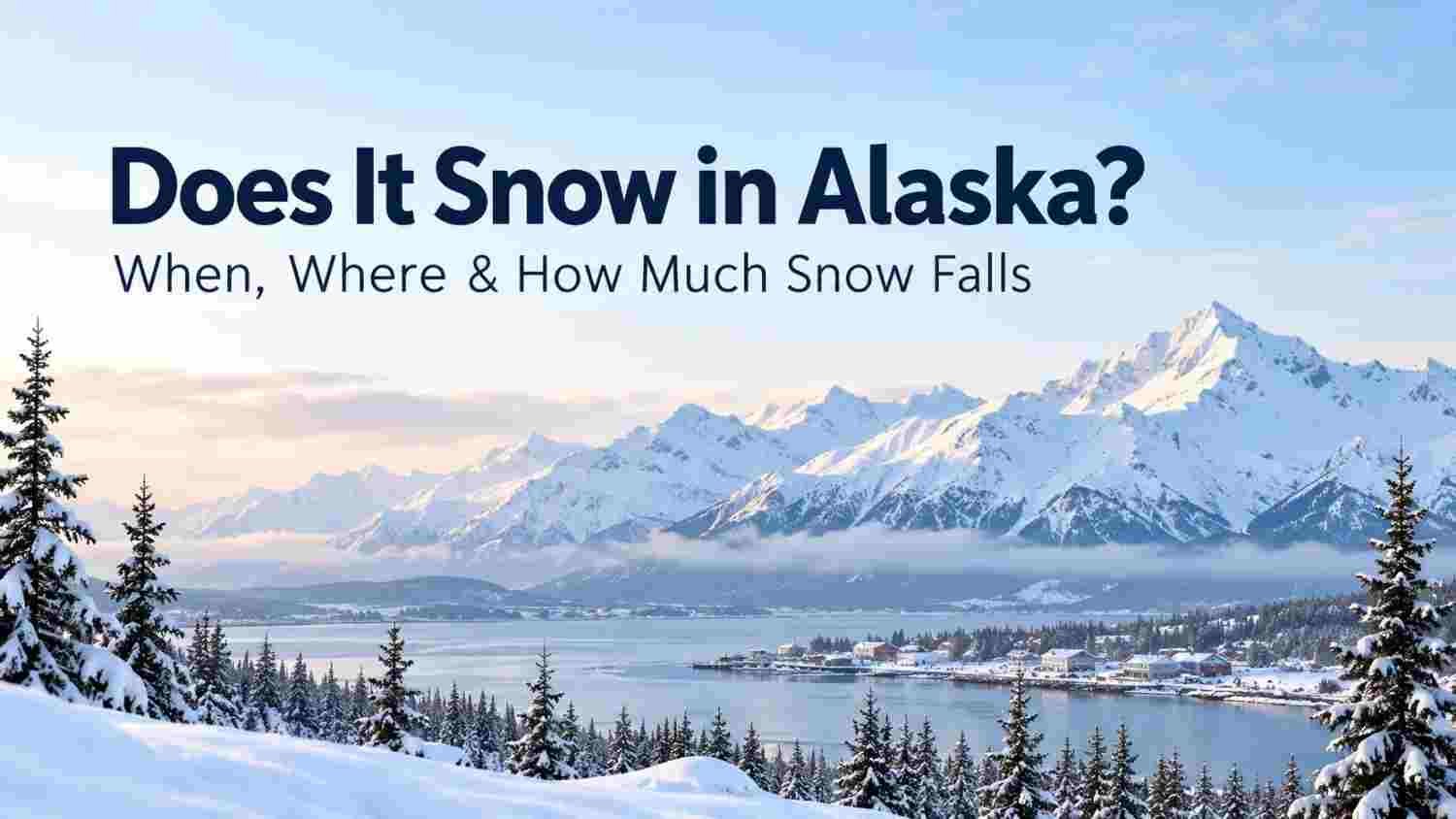
Does It Snow in Alaska? When, Where and How Much Snow Falls
Yes, it snows in Alaska, but the amount and length of the snow season vary greatly across the state. Fairbanks, Anchorage, Juneau, Valdez, Arctic communities, and mountain regions can experience very different winter conditions.
Some parts of Alaska develop long-lasting winter snow cover, while lower coastal locations can have periods of rain, melting, or little snow on the ground.
Alaska is also not covered in snow everywhere all year. Summer arrives in its towns and cities just as it does elsewhere, although glaciers, high mountains, and parts of the Arctic can retain snow or ice much longer.
If you are tracking winter weather for travel or school planning, Snow Day Calculators also provides snow-related tools and guides.
Does It Snow in Alaska?
Yes. Snow is a normal part of winter across much of Alaska.
However, asking how snowy Alaska is can be misleading because the state covers several very different climate regions.
Snowfall depends on factors such as:
- Latitude
- Elevation
- Distance from the ocean
- Mountain terrain
- Storm tracks
- Temperature
- Available moisture
Interior Alaska can remain extremely cold for long periods, while southern coastal areas generally receive more moisture.
That means the coldest location is not necessarily the place that receives the greatest amount of snowfall.
Is Alaska Always Snowy?
No. Alaska is not snowy everywhere throughout the year.
Most populated communities have a distinct warmer season when persistent snow cover disappears. Anchorage, Fairbanks, and Juneau all experience summer conditions without permanent snow covering the city.
There are important exceptions.
Snow or ice can remain through summer on:
- Glaciers
- High mountain peaks
- Permanent snowfields
- Some Arctic terrain
Even in the Arctic, however, summer conditions are different from the long winter season.
The Alaska Climate Research Center notes that snowfall has been observed during summer at Utqiagvik. Its long-term summer snowfall average is measurable, which shows how different Arctic Alaska can be from the southern part of the state.
When Does It Start Snowing in Alaska?
There is no single date when snow starts across Alaska.
The Alaska Climate Research Center reports that the earliest average first measurable snow occurs in Arctic areas. Across much of the rest of Alaska, the average first measurable snowfall generally occurs from late September through early November.
The timing changes by region.
Arctic Alaska
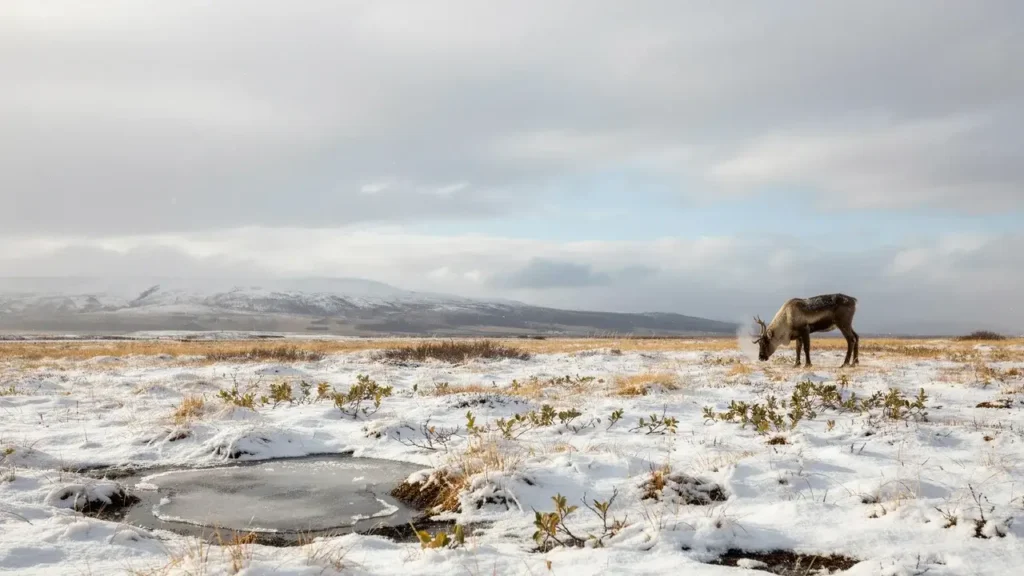
Snow can begin early in northern Alaska.
The Arctic has the earliest average first snowfall dates in the state, and some locations have even recorded snow during summer.
This does not mean snow continuously falls all year. It means cold conditions can return earlier than they do farther south.
Interior Alaska
Interior communities such as Fairbanks typically see their first measurable snow earlier than many southern coastal locations.
Cold temperatures can also help snow remain on the ground for long periods once a winter snowpack develops.
Southcentral Alaska
Anchorage and surrounding Southcentral communities usually enter the snow season later than much of Arctic and Interior Alaska.
The exact start changes each year depending on temperatures and storm patterns.
Southeast Alaska
Southeast Alaska generally sees later first snowfall dates than Interior and northern Alaska.
The Alaska Climate Research Center identifies Southeast locations among those with the latest average first measurable snowfall dates in the state.
When Does Snow Usually Stop in Alaska?
Snow does not disappear from every part of Alaska at the same time.
Spring melt depends heavily on:
- Latitude
- Elevation
- Local temperatures
- Snow depth
- Coastal influence
- Spring weather
Southern coastal communities can lose winter snow earlier than northern or Interior locations.
Mountain snow can remain long after snow has melted from nearby towns and roads.
It is also important to separate two different questions:
When does it stop snowing?
and
When does the snow on the ground finally melt?
A late spring snowfall may occur after most of the winter snowpack has already disappeared.
How Much Snow Does Alaska Get?
There is no useful single snowfall total for the entire state.
Alaska is too large and geographically varied for one number to describe its snowfall.
A coastal mountain community can experience very different snowfall from a dry Interior location. Snowfall can also change sharply over short distances as elevation increases.
The Natural Resources Conservation Service operates more than 80 automated weather stations across Alaska and works with partners to measure close to 200 manual snow sites during winter. These stations track snow depth, snow water equivalent, precipitation, and other snowpack conditions.
This extensive monitoring network illustrates why Alaska snow is best understood region by region.
Alaska Snowfall by Major City
Four Alaska locations appear frequently in snow-related searches: Anchorage, Fairbanks, Juneau, and Valdez.
They represent very different parts of the state.
| Location | Alaska Region | General Winter Pattern |
|---|---|---|
| Anchorage | Southcentral | Regular winter snow with maritime influence |
| Fairbanks | Interior | Long, cold winter with persistent snow cover |
| Juneau | Southeast | Wet coastal climate with snow and rain |
| Valdez | Southcentral coast | Moist mountain-influenced snowy climate |
These descriptions show the general pattern rather than guaranteeing conditions during any particular winter.
Snow in Anchorage, Alaska
Anchorage gets regular winter snowfall and develops seasonal snow cover.
Its Southcentral location gives it a different climate from both Interior Alaska and Southeast Alaska.
Anchorage can experience:
- Snowstorms
- Periods of cold weather
- Snow-covered roads
- Melting or compacting snow
- Changing conditions during warmer spells
The National Weather Service maintains long-term climate records for Anchorage, including snowfall data and 1991 to 2020 climate normals.
Travelers should use current forecasts rather than historical averages to decide what conditions they will encounter on a specific date.
Snow in Fairbanks, Alaska
Fairbanks has a much more continental climate than coastal Alaska.
Winters are long and cold, and once snow cover develops, low temperatures can help it remain on the ground for extended periods.
One useful distinction is that colder does not automatically mean snowier.
Snow needs moisture as well as cold air. Interior Alaska can be extremely cold while receiving less precipitation than wetter coastal mountain regions.
The National Weather Service maintains snowfall records and climate information for Fairbanks going back more than a century.
Fairbanks is therefore an excellent example of the difference between:
- extreme winter cold
- snowfall amount
- length of snow cover
They are related, but they are not the same thing.
Snow in Juneau, Alaska
Juneau has a maritime climate influenced strongly by the nearby ocean and surrounding mountains.
Its winters can include both snow and rain, particularly when temperatures rise around freezing.
The National Weather Service uses the 1991 to 2020 period for current Juneau climate normals and maintains a climate record extending back to the 1930s.
Juneau’s snow pattern differs substantially from Fairbanks because Southeast Alaska is:
- Wetter
- More strongly influenced by the ocean
- Generally milder in winter
- Surrounded by mountainous terrain
So two Alaska cities can have very different winter experiences even though both receive snow.
Snow in Valdez, Alaska
Valdez is located near the Gulf of Alaska and steep mountain terrain.
Its combination of Pacific moisture and mountains can support substantial snowfall.
The city should not be compared directly with Interior Alaska only by temperature. Coastal moisture and terrain are major parts of the snow equation.
For anyone planning travel to Valdez during winter, current road and weather information matters more than a historic annual snowfall figure.
Which Part of Alaska Gets the Most Snow?
The answer depends on what is being measured.
You could compare:
- Annual snowfall
- Maximum snow depth
- Snow water equivalent
- Length of snow cover
- Mountain snowpack
These do not always identify the same location.
Alaska’s wet coastal mountain regions can receive very heavy snowfall because moisture from the Gulf of Alaska rises over mountainous terrain.
By contrast, Interior and Arctic locations can stay colder for longer periods while receiving less total precipitation.
So it is safer to say that some of Alaska’s heaviest snowfall occurs in moisture-rich coastal mountain environments rather than naming one permanent statewide winner without specifying the measurement and period.
Does It Snow in Alaska All Year?
Not in most populated places.
Anchorage, Fairbanks, Juneau, and many other communities experience a summer season without continuous snow cover.
Year-round snow and ice are more likely on:
- Glaciers
- High mountain terrain
- Permanent snowfields
- Some far northern landscapes
A place can also receive an unusual summer snowfall without having year-round ground snow.
That distinction matters when answering whether Alaska “has snow all year.”
Does It Snow in Alaska in Summer?
It can, but summer snowfall is unusual in most populated low-elevation parts of Alaska.
Summer snow is more plausible in:
- Arctic Alaska
- High mountain terrain
- Unusually cold weather events
The Alaska Climate Research Center reports that Utqiagvik has recorded snowfall during summer and has a measurable 30-year average for summer snow.
Does it snow in Alaska in June?
Snow can still occur in northern or elevated locations, but persistent city snow cover is not typical across most populated southern areas.
Does it snow in Alaska in July?
July snow is unusual for most Alaska cities.
It remains possible in Arctic and mountain environments.
Does it snow in Alaska in August?
Higher mountains and far northern areas can experience early cold weather, but most populated locations are still in their summer season.
The probability of snow increases as Alaska moves toward autumn.
Does It Snow in Alaska in September?
Yes, September can mark the return of snow in parts of Alaska.
Northern and Interior locations tend to see first snow earlier than Southeast Alaska.
The Alaska Climate Research Center’s statewide first-snow analysis shows that first measurable snowfall dates vary significantly by location, with Interior and northern stations generally earlier than coastal and southern stations.
September snow therefore does not mean winter has arrived everywhere in the state.
What Month Gets the Most Snow in Alaska?
There is no single statewide snowiest month.
The answer changes by location.
A coastal city receiving moisture-rich winter storms can have a different monthly snowfall pattern from a colder Interior community.
This is another reason Alaska snowfall should be checked using city-specific climate records rather than a statewide average.
For planning purposes, use National Weather Service climate data for the exact community you are interested in.
Why Does Snowfall Vary So Much Across Alaska?
Alaska contains one of the widest ranges of winter conditions in the United States.
Several factors explain the differences.
Latitude
Northern Alaska has longer, colder winters.
Farther south, temperatures are generally milder and the snow season often begins later.
Elevation
Mountain temperatures usually fall as elevation increases.
This means mountains can have snow while nearby coastal or valley communities have rain or bare ground.
Ocean Influence
The Pacific Ocean and Gulf of Alaska supply moisture to southern Alaska.
Coastal areas can receive frequent precipitation, but temperatures may also be mild enough for some storms to produce rain instead of snow.
Mountain Ranges
Mountains force moist air upward.
As that air rises and cools, it can produce heavy precipitation on exposed mountain slopes.
Interior Climate
Interior Alaska is farther from the moderating influence of the ocean.
That contributes to colder winter temperatures and long-lasting seasonal snow cover.
How Long Does Snow Stay on the Ground in Alaska?
The answer varies considerably.
In Interior and northern Alaska, snow can remain on the ground for many months because temperatures stay below freezing for long periods.
In southern coastal communities, warmer winter periods can cause:
- Melting
- Rain on snow
- Compacted snow
- Ice formation
- Changes in snow depth
High mountain areas may keep snow far longer than nearby towns.
This means snow cover duration can be more useful than total snowfall when someone wants to know how “snowy” an Alaska winter feels.
How to Check Current Snow in Alaska
Historical snowfall tells you what usually happens.
It does not tell you how much snow is on the ground today.
For current conditions, use live or recently updated sources.
Check NRCS Alaska Snow Data
The NRCS Alaska Snow Survey provides current information on:
- Snow depth
- Snow water equivalent
- Recent snowpack changes
- Precipitation
- Individual monitoring stations
The network includes more than 80 automated stations that send data hourly.
This is especially useful for mountain snowpack.
Check the National Weather Service
Use the local National Weather Service forecast for the exact city or region.
Forecast information can include:
- Expected snowfall
- Winter storm warnings
- Temperature
- Wind
- Ice
- Visibility
Avoid using a statewide forecast when you are planning for one specific Alaska community.
Check Alaska 511 Before Driving
Alaska 511 publishes winter road conditions approximately from October through May.
Its winter road information can include:
- Packed snow
- Ice
- Snow accumulation
- Blowing snow
- Visibility problems
- Road closures
- Roads without winter maintenance
Some Alaska highways receive no winter maintenance for part of the year, so route checks are especially important before long-distance winter travel.
Alaska DOT also warns that reported road observations are not always real-time and conditions can differ substantially only a few miles away. Drivers should check several sources before deciding whether to travel.
Alaska Snow and School Closures
Snowfall alone does not determine whether an Alaska school will close.
Districts can consider factors such as:
- Road conditions
- Ice
- Snow accumulation
- Visibility
- Bus safety
- Temperature
- Local forecasts
If you are following an incoming storm because it could affect school schedules, you can use the Snow Day Predictor as an additional planning tool.
Always confirm the final decision through the school district or other official local source.
FAQs About Snow in Alaska
Does it snow everywhere in Alaska?
Snow occurs across much of Alaska, but snowfall amount, timing, and snow-cover duration vary significantly.
Coastal, Interior, Arctic, and mountain regions can have very different winter conditions.
Does Anchorage get a lot of snow?
Anchorage receives regular winter snowfall and seasonal snow cover.
The amount changes from one winter to another, so historical climate normals should not be treated as a forecast for a particular year.
Does Fairbanks get more snow than Anchorage?
Not necessarily.
Fairbanks is generally colder, but colder temperatures alone do not guarantee greater snowfall. Moisture availability also affects how much snow falls.
Does Juneau get snow?
Yes.
Juneau receives winter snow, but its maritime climate also allows rain and mixed precipitation when temperatures are milder.
When does snow start in Anchorage?
The exact date varies each year.
Southcentral Alaska generally receives its first measurable snowfall later than northern and Interior locations, so check current Anchorage forecasts as autumn progresses.
When does snow start in Fairbanks?
Interior Alaska generally sees its first measurable snowfall earlier than many southern coastal communities.
The exact timing changes from year to year.
Can it snow in Alaska in July?
Yes, but mainly in unusual cold conditions, high mountain terrain, or the far north.
July snowfall is not normal for most populated southern Alaska communities.
Does Alaska have snow in September?
Some parts do.
Northern and Interior Alaska can begin receiving measurable snow during September, while southern coastal areas may remain snow-free longer.
How many months does it snow in Alaska?
There is no statewide number.
Snow can fall across a much longer portion of the year in northern and Interior Alaska than in some southern coastal communities.
Is Alaska covered in snow all winter?
Large parts of northern and Interior Alaska commonly maintain winter snow cover for long periods.
Some coastal locations can experience melting, rain, and changing snow depth during winter.
Understanding Alaska’s Snow Season
Alaska gets plenty of snow, but there is no single Alaska snow season that applies everywhere.
Northern and Interior Alaska generally enter winter earlier and maintain snow cover longer. Southcentral and Southeast Alaska have stronger coastal influences, while mountain areas can receive far more snow than nearby towns.
If you are checking conditions for a trip, school schedule, or outdoor activity, use historical snowfall only as background. Check the latest National Weather Service forecast, current snow data, and Alaska 511 road conditions before making plans.