Snow in Montana: When It Falls, How Much, and Where (2026 Guide)
Snow in Montana is a defining part of life in the Treasure State. It arrives early in the mountains, lingers for months, and shapes everything from road travel to ski seasons. Montana is huge, though, so the answer to “how much snow” depends heavily on where you stand. The western ranges get buried for half the year. The eastern plains see far less, and warm Chinook winds often melt it within days. This guide breaks down when the snow starts, how much each region gets, and how to check conditions before you travel.
Does It Snow in Montana?
Yes, and in most of the state it snows a great deal. Montana sits in the northern Rockies, so cold air and mountain terrain combine to produce long winters. The amount varies by elevation and region more than almost any other factor.
Mountain towns and ski areas measure snowfall in hundreds of inches. Valley cities like Missoula and Helena see moderate seasonal totals. The eastern plains around Billings and Miles City get regular snow, but frequent thawing keeps the ground from staying white for long.
So the short version is simple. Montana is a snowy state overall, but your experience changes completely between the mountains and the plains.
When Does It Snow in Montana?
For most of Montana, snow season runs from roughly September through May. The first flakes usually appear in the mountains well before the valleys.
Great Falls offers a reliable benchmark for the central part of the state. According to the local National Weather Service office, the average first measurable snowfall there lands around October 8. The average last snowfall falls near May 11. That is close to an eight month window where snow is possible.
Across northern, central, and southwestern Montana, the first measurable snow typically arrives between late September and the last week of October. Lower elevations in the east often wait until early November. High mountain passes are a different story. They can pick up snow in September, and in rare years snow has fallen in parts of the state as early as mid August.
Montana’s snow does not follow a single schedule. Elevation sets the pace, and the gap between the first mountain dusting and the first valley snow can stretch for weeks.
How Much Snow Does Montana Get?
Statewide averages are misleading because the range is so wide. A better approach is to look at specific cities and resorts.
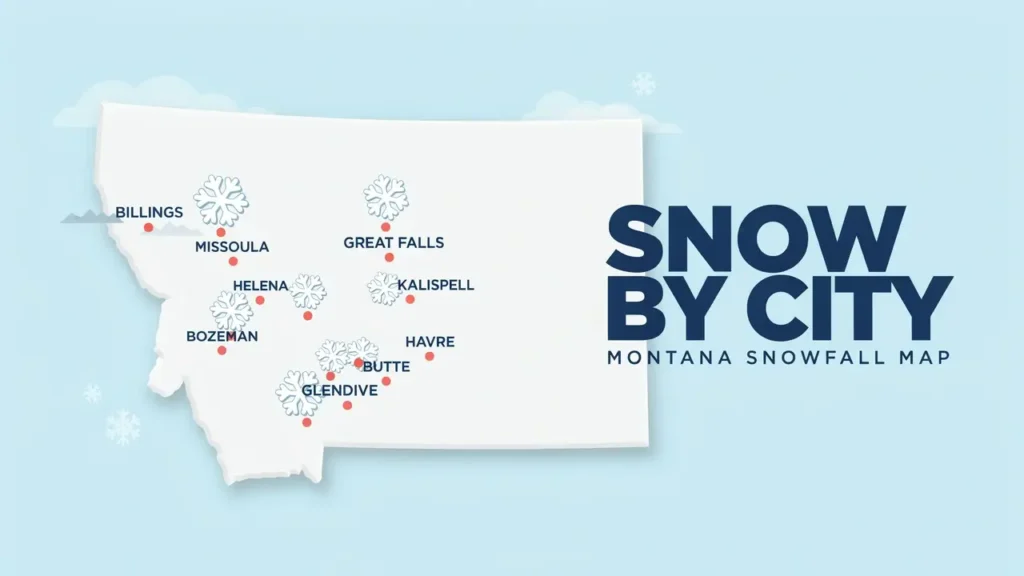
The table below shows long term average annual snowfall for key Montana locations. These figures come from NOAA based climate data and vary slightly by station and measurement period.
| Location | Average Annual Snowfall | Notes |
|---|---|---|
| Bozeman | about 91 in | Highest among Montana’s larger cities |
| Great Falls | about 61 in | Central Montana benchmark |
| Billings | about 55 to 57 in | Melts fast due to Chinook winds |
| Kalispell | about 46 in | Northwest valley near Glacier |
| Helena | about 44 in | State capital, mountain valleys nearby |
| Missoula | about 40 to 45 in | Sheltered western valley |
| Big Sky Resort | about 265 in | Measured mountain snowfall, not a town figure |
A few patterns stand out. Bozeman leads the major cities, helped by its higher elevation and position near the mountains. Billings and Great Falls sit in a similar range on the plains. The mountain resorts operate on a completely different scale, with Big Sky averaging several times what any valley city receives.
Snow in Montana Today: How to Check Current Conditions
Many people searching for Montana snow conditions want to know what is happening right now, not the yearly average. Conditions change fast here, especially near the mountains.
For live and short term information, use these sources:
- National Weather Service (weather.gov): Current forecasts, winter storm watches, and warnings for your exact town.
- Montana Department of Transportation 511: Real time road and pass conditions, which matter most during storms.
- Local news forecasts: Stations in Billings, Great Falls, Missoula, and Helena track incoming systems closely.
If you are trying to figure out whether weather might close schools, our snow day predictor estimates the odds based on forecast conditions. You can also run your local numbers through the snow day calculator for a quick closure probability. Both tools are built for parents and students watching a storm roll in.
Snow in Big Sky, Montana
Big Sky sits in the southern part of the state and is one of Montana’s premier ski destinations. The mountain gets far more snow than any valley town.

Big Sky Resort records an average of roughly 265 inches of snow per year, spread across about 70 snowfall days. Some seasons run much higher. The resort has logged totals near 400 inches and above in its biggest years. The ski season generally runs from late November into April, with the deepest base usually building through February and March.
If you are planning a trip, snow conditions in Big Sky are strongest in midwinter. December through March offers the most reliable powder and the deepest base depths.
Snow in Billings, Montana
Billings is Montana’s largest city and sits in the south central plains along the Yellowstone River. Its snow story is different from the mountain towns.
The city averages around 55 to 57 inches of snow each winter. The catch is that it rarely stays on the ground. Chinook winds can push temperatures up sharply in a matter of hours, melting fresh snow quickly. Residents often joke that if you dislike the weather, you only need to wait a few minutes.
Big winters still happen. The 2017 to 2018 season set a Billings record with just over 106 inches of snow, nearly double the normal total. So while Billings is milder than the mountains, it can still get hit hard.
Does It Snow in Montana in June and Summer?
This is one of the most common questions, and the answer surprises many visitors. Yes, it can snow in June and even into July, but only at high elevations.
The valleys and plains are usually warm and green by June. The mountains are a different world. Two famous roads make this clear.
Going-to-the-Sun Road in Glacier National Park climbs to Logan Pass at 6,646 feet. Plow crews fight deep snow every spring, and the full road typically does not open until late June or early July. Spring snow at Logan Pass can average more than five feet, and drifts have reached far higher in big years. In 2022, heavy June storms kept the road from opening by July 4 for only the second time in its history.
The Beartooth Highway is even higher, topping out near 10,947 feet on its way toward Yellowstone. It usually opens around the Friday before Memorial Day, but summer snowstorms can close it with little warning. Snow remains possible along that route well into the warm months.
So if you are chasing summer snow, head for Montana’s high passes and peaks. Down in the valleys, June snow is rare and usually melts within hours.
Montana Snow by Region
Thinking in three regions makes the state easier to understand.
- Western Montana: The Rocky Mountains dominate here. Snow starts early, piles deep, and lingers in the high country into summer. Towns like Kalispell and Whitefish sit near major ski terrain.
- Central Montana: Cities like Great Falls and Helena see solid winter totals and a long season. The Rocky Mountain Front can produce heavy, wet storms.
- Eastern Montana: The plains around Billings and Miles City get regular snow, but Chinook winds and open terrain mean it often does not last.
This regional split explains why one Montanan can be shoveling two feet while another a few hours away sees bare ground.
Frequently Asked Questions
Does it snow in Montana in June? Yes, but mainly in the mountains and high passes. Valley and plains snow in June is rare, though it has happened. High routes like the Beartooth Highway can see snow through early summer.
When does snow usually stop in Montana? In the valleys and plains, snow typically winds down by April or May. Great Falls averages its last snowfall around May 11. Mountain areas hold snow far longer, sometimes into July.
What is the snowiest city in Montana? Among the larger cities, Bozeman leads with about 91 inches a year. Mountain ski resorts such as Big Sky and Bridger Bowl receive several times more than any town.
Is it snowing in Montana right now? It depends entirely on the day and your location. Check the National Weather Service forecast for your town, and use our snow day tools if you want closure odds during a storm.
Does it snow a lot in Montana? In the mountains, absolutely. In the eastern plains, totals are moderate and melt quickly. The state as a whole is snowy, but the experience depends on where you are.
The Bottom Line
Snow in Montana is less about a single number and more about geography. The mountains deliver early, deep, and long lasting snow that fuels world class ski seasons. The plains get real winters too, just shorter and faster melting. Whether you are planning a ski trip to Big Sky, watching for a storm in Billings, or wondering about June snow on a mountain pass, the key is to check current conditions before you go. Montana rewards the prepared, and its snow is a big part of why people love living here.