Why Ice Causes More School Closures Than Snow
Many people assume heavy snow is the main reason schools close in winter. In reality, ice often causes more closures than snow.
Freezing rain and icy roads create unpredictable and dangerous conditions. Even small amounts of ice can make travel unsafe. That is why schools frequently close during ice events, sometimes without any snow at all.
This guide explains why ice leads to more school closures than snow and how schools evaluate the risk.
Is Ice Worse Than Snow for School Closures?
Yes. Ice is usually more dangerous than snow.
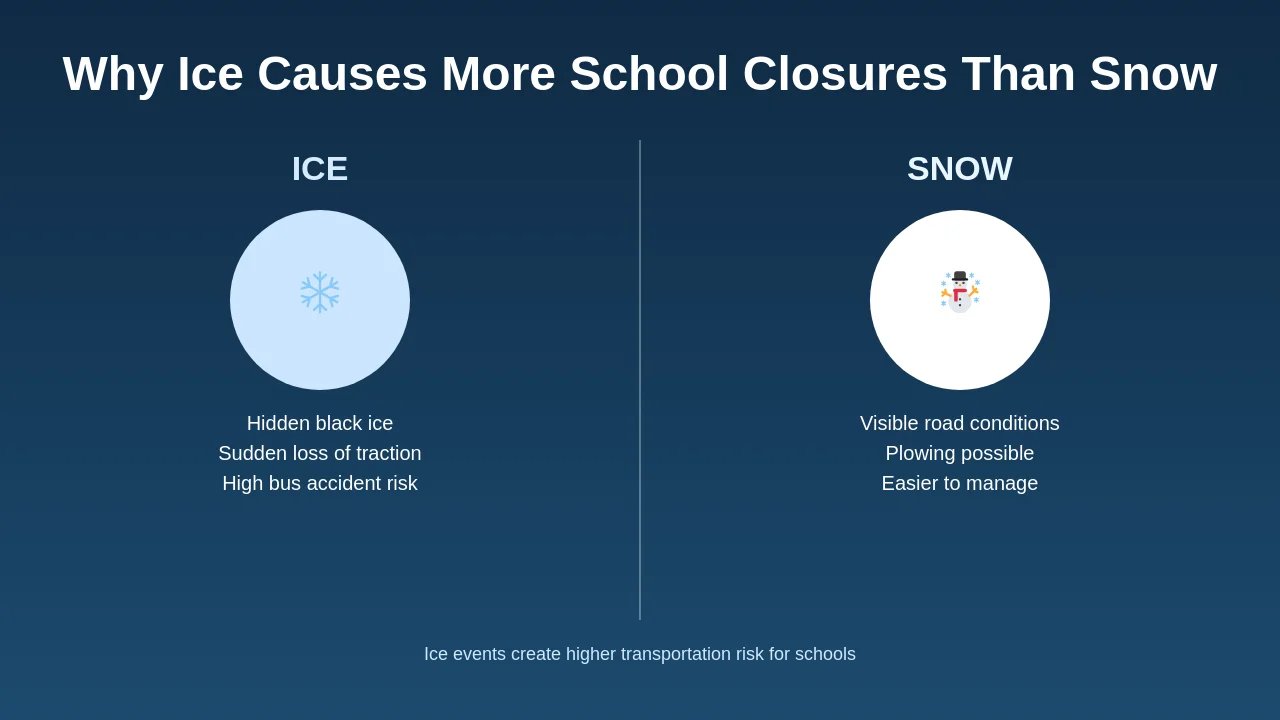
Ice creates slick, invisible surfaces that increase accident risk. Snow is visible and easier to manage. Ice often forms without warning and is harder to remove.
Because student safety comes first, schools treat ice events with extra caution.
How Ice Forms During Winter Storms
Ice forms when rain falls through warm air and freezes on contact with cold surfaces.
This process creates freezing rain. Unlike snow, freezing rain coats roads, sidewalks, and vehicles with a smooth ice layer.
Air temperature alone does not tell the full story. Surface temperatures can remain below freezing even when the air feels warmer. This mismatch increases danger and makes ice events harder to predict.
Why Freezing Rain Is So Dangerous
Black Ice and Hidden Hazards
One of the biggest risks is black ice.
Black ice blends into the road surface and is hard to see. Drivers may not realize it is present until traction is lost.
Bridges, overpasses, and shaded roads freeze first. These areas are common on school bus routes.
Sudden Loss of Traction
Ice removes tire grip almost instantly.
Braking distance increases sharply. Steering becomes unreliable. Even experienced drivers struggle on icy roads.
Snow, by contrast, often provides some friction and warning signs before conditions worsen.
Why Ice Creates More Risk for School Buses
Bus Weight and Braking Limits
School buses are heavy vehicles.
Their weight makes them harder to stop on ice. Anti-lock brakes help, but they cannot overcome physics.
A sliding bus is difficult to control, especially on hills or curves.
Bus Stops and Student Safety
Students wait at bus stops early in the morning.
Icy sidewalks, steps, and curbs increase the risk of slips and falls. Younger students face greater risk.
If students cannot safely reach or board buses, schools are more likely to close.
Why Snow Is Easier to Manage Than Ice
Snow is visible and predictable.
Plows can remove snow. Salt and sand improve traction. Drivers can see conditions and adjust speed.
Ice behaves differently.
It forms underneath tires. Treatments may not work in extreme cold. Ice can return after treatment when temperatures drop again.
This makes ice events more dangerous, even with lower precipitation levels.
How Ice Affects School Closure Decisions
School districts focus on transportation safety. Ice risk is one of the key factors schools evaluate when deciding whether travel conditions are safe for students and staff.
When freezing rain appears in forecasts, administrators act early. They know road conditions can deteriorate fast.
This is why schools sometimes close with little or no snow accumulation. Ice risk alone can justify a closure.
Snow day prediction tools reflect this behavior by assigning higher risk during ice events, especially when forecasts show freezing rain overnight.
Ice vs Snow in Different Regions
Regional experience matters. Northern states often manage snow well. They have equipment, trained drivers, and established procedures. Ice is different. Even snow-prepared regions struggle with freezing rain.
Southern and warmer regions face even higher risk. These areas lack ice-response infrastructure. Roads and drivers are less prepared. Schools in these regions often close quickly when ice appears in forecasts.
Understanding regional behavior helps explain why closures vary by location. Reviewing state-level snow day trends can provide clearer expectations.
How Snow Day Calculators Handle Ice Events
Snow day calculators do not look at snowfall alone. They analyze multiple weather factors, including ice risk, temperature, wind, and timing. Ice events often cause probability spikes. This happens because even small forecast changes can significantly affect safety.
Using a snow day calculator works best when users check updates frequently during freezing rain events. Conditions can change overnight.
Common Misunderstandings About Ice Closures
Some people believe schools only close for heavy snow. This is incorrect. Others assume warmer temperatures prevent closures. Surface ice can still form even when air temperatures rise.
Another misconception is that salting solves the problem. Salt loses effectiveness in extreme cold and may not work fast enough. These misunderstandings explain why ice closures often surprise families.
Frequently Asked Questions
Final Thoughts
Ice creates more risk than snow in many winter situations. It reduces traction, hides danger, and increases transportation hazards. School administrators know this and act conservatively during ice events.
Understanding the role of ice helps explain why schools close unexpectedly. It also helps families interpret snow day probabilities more realistically. For the best results, always combine probability tools with updated forecasts and official school announcements.