Wet Snow vs Dry Snow: Which One Cancels School Faster?
Not all snow is the same. Two storms can drop the same number of inches and lead to very different outcomes. One might close schools across a district. The other might barely cause a delay. The difference often comes down to wet snow vs dry snow.
Understanding how snow type affects roads, buses, and safety explains why schools react differently to similar snowfall totals.
What Is Wet Snow?
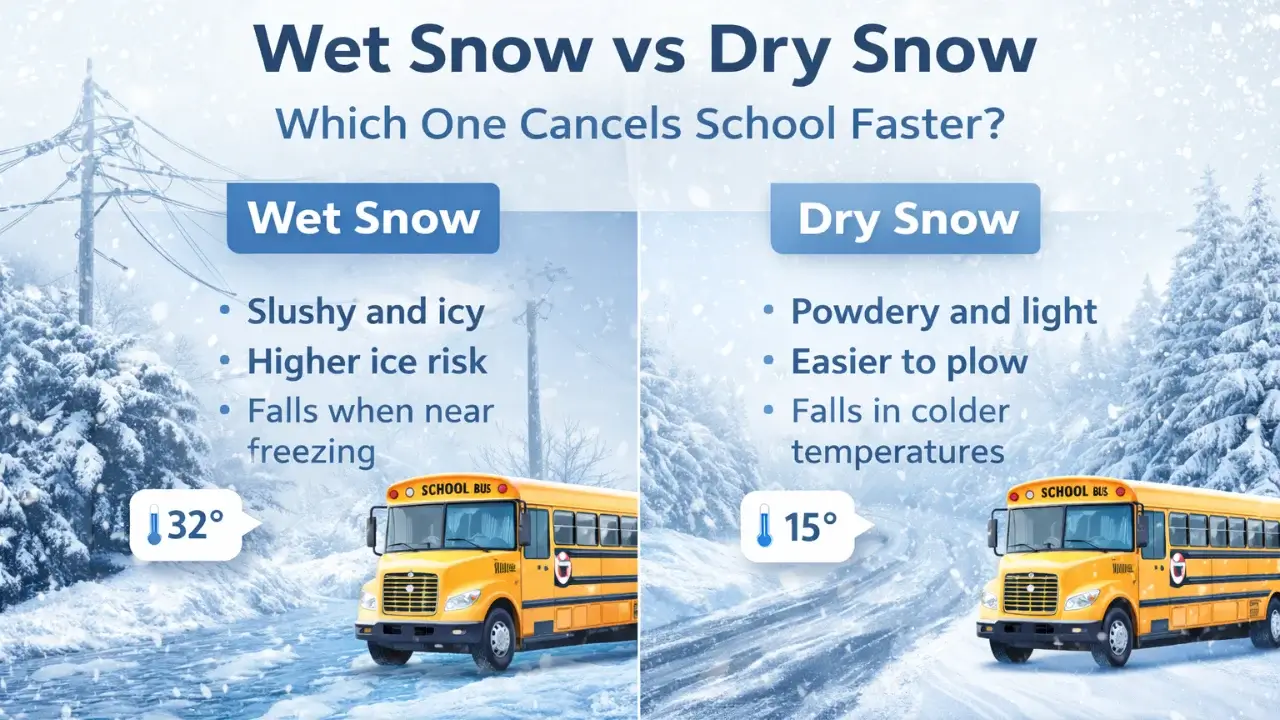
Wet snow forms when air temperatures are close to freezing. The snowflakes contain more water and pack together easily.
Key traits of wet snow:
- Heavy and dense
- Sticks to roads, trees, and power lines
- Turns slushy quickly
- Freezes again overnight
Because of its weight and moisture, wet snow creates problems faster than dry snow.
What Is Dry Snow?
Dry snow forms in colder air. The flakes are lighter and contain less water.
Key traits of dry snow:
- Light and powdery
- Easier to plow
- Less likely to stick
- Lower ice risk
Dry snow often looks worse than it actually is. Roads may remain safer even with higher totals.
Why Wet Snow Cancels School Faster
School closures are about risk, not inches alone. Wet snow increases risk in several ways.
Road Conditions Deteriorate Quickly
Wet snow compresses under tires and turns into slush. As temperatures drop, that slush freezes into ice.
This creates:
- Slick intersections
- Poor braking conditions
- Dangerous bus routes
Even a few inches of wet snow can make roads unsafe by morning.
School Buses Are More Affected
School buses are heavy and stop often. Wet snow reduces traction more than dry snow.
Districts pay close attention to:
- Rural roads
- Hills
- Sharp turns
If buses cannot operate safely, closures become more likely.
Ice Risk Is Higher
Wet snow often mixes with:
- Freezing rain
- Drizzle
- Melt-refreeze cycles
Ice matters more than snow depth.
Many schools close for ice even when snowfall totals are low.
Power Outages Increase Safety Concerns
Wet snow sticks to trees and power lines.
This raises the chance of outages and blocked roads.
Districts may close schools as a precaution when:
- Power is unstable
- Traffic signals fail
- Emergency response is delayed
Why Dry Snow Often Does Not Cancel School
Dry snow creates different conditions.
Roads Stay More Drivable
Dry snow is easier to plow and salt. It does not bond to pavement as strongly.
Even higher totals can remain manageable if:
- Temperatures stay cold
- Snow falls slowly
- Crews have time to clear roads
Less Ice Formation
Dry snow rarely melts and refreezes quickly. Without water content, ice buildup is slower. This lowers early-morning risk for buses and drivers.
Northern Regions Are Better Prepared
Areas that see frequent dry snow often have:
- Better plowing schedules
- More experience with winter travel
- Higher snow tolerance
The same snowfall amount that closes schools in one region may not affect another.
Wet Snow vs Dry Snow: Which One Matters More?
In most cases, wet snow cancels school faster than dry snow.
Here is why:
- Wet snow creates ice sooner
- Roads become unsafe faster
- Bus safety declines rapidly
- Cleanup takes longer
A smaller amount of wet snow can have more impact than a larger amount of dry snow.
How Schools Evaluate Snow Type
School districts do not rely on snowfall totals alone. They evaluate conditions as a whole.
Factors include:
- Snow type
- Overnight temperatures
- Road treatment effectiveness
- Timing of snowfall
- Local geography
This explains why two districts may respond differently to the same forecast.
How This Affects Snow Day Predictions
Snow type is a key variable in snow day estimates.
A forecast showing:
- 3 inches of wet snow overnight
may carry more closure risk than - 6 inches of dry snow during the day
Understanding this difference helps parents and students interpret forecasts more accurately.
Check Snow Day Chances Based on Local Conditions
Snow impact depends on location. Climate, road infrastructure, and experience all matter. Location-based tools like snow day calculators combine snowfall amount, timing, and conditions to estimate how likely a closure may be in your area.
Frequently Asked Questions
Key Takeaway
Snow totals alone do not tell the full story. Snow type often matters more.
Wet snow increases ice risk, reduces traction, and creates safety concerns faster than dry snow. That is why schools are more likely to close during wet snow events, even when totals seem modest.
Understanding this difference helps explain why snow day decisions can feel inconsistent. They are based on conditions, not just inches.