Does It Snow in Arkansas? Snowfall Patterns, Forecast, and School Closures
Does it snow in Arkansas? Yes, it does, but not the way many people expect. Snowfall in this state is usually light, short lived, and uneven across regions.
Most winters bring at least one measurable snowfall event. Northern counties often see more accumulation than southern areas. Ice storms and freezing rain are sometimes more disruptive than snow itself.
If you are wondering whether Arkansas gets regular snow or rare flurries, the answer depends on location, elevation, and winter weather patterns. Cold air moving south and moisture from the Gulf of Mexico often create brief snow chances.
Let’s break down how much snow Arkansas gets, when it falls, and how it affects schools and daily life.
Does It Snow in Arkansas?
Yes, snow in Arkansas happens almost every winter. However, totals are usually lower than states farther north.
Here is what matters most:
- Snowfall is more common in northern Arkansas.
- Southern areas may only see light accumulation.
- Many events produce one to three inches.
- Ice storms sometimes cause bigger problems than snow.
Northwest Arkansas, especially near the Ozarks, sees more consistent winter weather. Central and southern counties often experience mixed precipitation instead of steady snow.
Because temperatures often hover near freezing, small changes in air mass can shift rain into snow quickly. That is why forecasts can change within hours during active winter systems.
Snow is not constant across the state, but it is part of most winter seasons.
How Much Snow Does Arkansas Get Each Year?
Average snowfall in Arkansas varies by region. Northern counties usually record higher totals than central and southern areas.
Here is a general range:
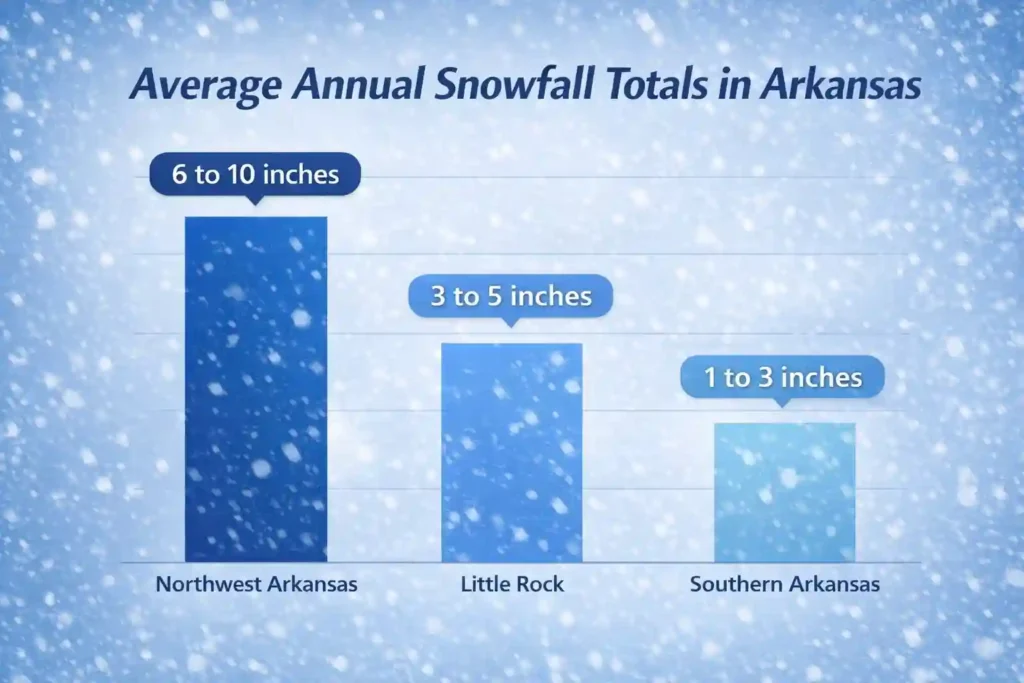
- Northwest Arkansas often gets 6 to 10 inches per year.
- Little Rock averages around 3 to 5 inches.
- Southern Arkansas may receive only 1 to 3 inches.
- Some winters bring less than average snowfall statewide.
Snow totals Arkansas records depend heavily on temperature timing. If cold air arrives late, precipitation may fall as rain instead of snow.
Elevation also plays a role. Higher terrain in the Ozark Mountains supports slightly colder conditions. That difference can mean measurable accumulation while lower elevations see cold rain.
Recent winters show variability:
- Some seasons produce multiple small snow events.
- Other years bring just one measurable snowfall.
- A strong Arctic outbreak can increase totals quickly.
When reviewing Arkansas snow totals, it helps to look at both accumulation and frequency. Even light totals can disrupt roads, especially in areas without heavy snow removal equipment.
How Often Does It Snow in Arkansas?
Snowfall is not weekly or constant in Arkansas. Most winters bring one to three measurable events.
In many years:
- One system produces light accumulation.
- Another event may bring a mix of snow and sleet.
- Some areas see only flurries with no buildup.
Northern counties tend to see snow more often. Southern counties sometimes go an entire winter without measurable totals.
How often does it snow in Arkansas depends on three factors:
- Strength of Arctic air pushing south.
- Moisture from the Gulf of Mexico.
- Storm track across the southern United States.
If the storm shifts slightly north, Arkansas may get rain instead of snow. If cold air holds longer, accumulation becomes more likely.
In short, snow is seasonal but not frequent. It is usually tied to specific cold fronts rather than prolonged winter patterns.
When Does It Snow in Arkansas?
Snowfall in Arkansas usually happens between December and February. January is often the coldest month and the most active for winter systems.
Here is how timing typically works:
- December can bring early season snow during Arctic outbreaks.
- January has the highest chance of measurable accumulation.
- February still sees snow, especially in northern areas.
- March snow is rare but not impossible.
When will it snow in Arkansas depends on temperature alignment. Cold air must arrive at the same time as moisture. If either one is missing, snow will not develop.
Storm systems moving across Texas and Oklahoma sometimes shift east. When that happens, central and northern Arkansas can see quick snowfall events.
Because temperatures often sit near freezing, small forecast changes matter. A one or two degree shift can turn snow into cold rain within hours.
Understanding these patterns helps explain why snowfall timing is limited but still expected most winters.
Arkansas Snow Forecast and Predictions
Winter forecasting in Arkansas depends on temperature trends and storm movement. Snow forecast in Arkansas models focus on cold air depth and timing.
Common forecast questions include:
- Will Arkansas get snow this year?
- Will it snow in Arkansas this winter?
- When is it supposed to snow in Arkansas?
- Are Arkansas snow predictions reliable?
Meteorologists track:
- Arctic fronts moving south.
- Low pressure systems crossing Texas and Oklahoma.
- Gulf moisture feeding winter storms.
- Surface temperatures near freezing.
Even small shifts in wind or pressure can change snowfall totals quickly. That is why predictions sometimes adjust within 24 hours.
If you want to estimate how likely snow could impact schools in your area, you can check the live probability using our main snow day calculator. It blends real time weather data with regional closure patterns to give a localized estimate.
Forecasting here is not just about inches of snow. It also includes ice risk, road safety, and how long freezing temperatures remain in place.
Is It Snowing in Arkansas Right Now?
Many people search for real time updates during active winter weather. They want to know if snow is falling at this moment.
To check current conditions, look at:
- Live radar maps showing precipitation bands.
- Surface temperature readings in your county.
- Local weather alerts and advisories.
- Snow accumulation reports from nearby cities.
If radar shows precipitation but temperatures are above freezing, it may be rain instead of snow. If temperatures are near 32 degrees, the type of precipitation can change quickly.
Is it snowing in Arkansas right now depends on location. Northwest Arkansas may see snow while southern counties experience cold rain.
Real time tracking matters because snowfall events in this state are often short. A burst of snow may last only a few hours before tapering off.
For the most accurate picture, combine radar data with local forecasts. That helps you understand both current snowfall and expected accumulation.
Snowfall by Region in Arkansas
Snow does not fall evenly across the state. Elevation, latitude, and storm track all influence accumulation.
Northern Arkansas usually records higher snowfall totals. Southern counties often see lighter events or mixed precipitation.
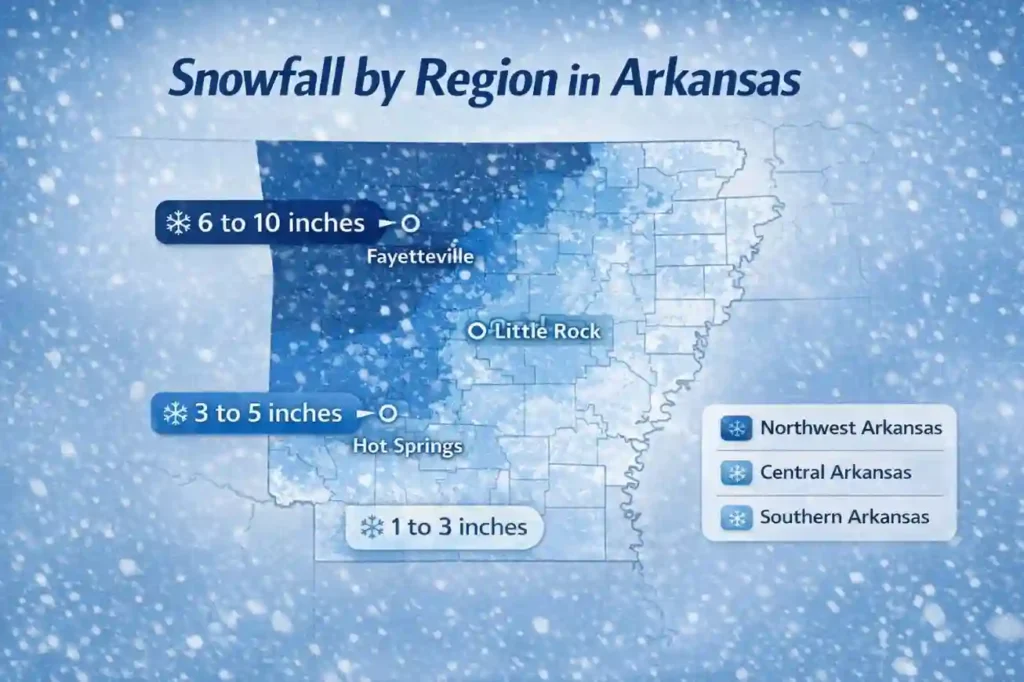
Key regional factors include:
- Ozark Mountains elevation.
- Distance from Arctic air sources.
- Proximity to Gulf moisture.
- Urban heat influence in larger cities.
Understanding regional variation helps explain why one area may close schools while another remains open.
Northwest Arkansas Snow
Northwest Arkansas snow events are more frequent than other regions. Higher terrain supports colder surface temperatures.
Cities like Fayetteville and Bentonville often record:
- Multiple measurable snowfall events per winter.
- Accumulation between 6 and 10 inches in active seasons.
- Occasional winter storms with heavier totals.
Because roads are not built for constant snow, even moderate accumulation can disrupt travel.
Little Rock Arkansas Snow
Little Rock Arkansas snow totals are usually lower than northern counties. Central Arkansas averages around 3 to 5 inches per year.
Does it snow in Little Rock Arkansas every winter? In most years, yes, but totals are often light.
Snow in Little Rock Arkansas may include:
- One or two measurable events.
- Short duration snowfall.
- Quick melting after temperatures rise.
Urban heat and slightly warmer air often limit accumulation in the metro area.
Hot Springs and Central Arkansas Snow
Hot Springs Arkansas snow events are typically light. Central Arkansas sometimes receives a mix of snow, sleet, and freezing rain.
Accumulation often depends on storm track. A slight northward shift can reduce snowfall and increase cold rain.
Eureka Springs and Mountain Areas
Higher elevations near Eureka Springs see colder winter conditions. Snowfall is more likely to accumulate in mountain areas.
Does it snow in Eureka Springs Arkansas more than southern regions? Yes, elevation supports slightly higher totals.
These mountain areas can experience:
- Longer lasting snow cover.
- More frequent measurable accumulation.
- Greater impact during winter storms.
Snow Totals and Recent Winter History
Looking at past winters helps explain future expectations. Snow in Arkansas 2024 brought light to moderate totals in northern counties.
Recent seasons show:
- Northwest Arkansas recording several measurable events.
- Central Arkansas seeing brief snowfall with quick melting.
- Southern counties experiencing mixed precipitation instead of steady snow.
How much snow did Arkansas get in recent winters varies by year. Some seasons produce multiple small events. Other winters bring only one measurable snowfall.
Snow in Arkansas 2025 searches often increase before winter begins. Long range outlooks suggest variability based on temperature patterns and storm frequency.
Tracking Arkansas snow totals year by year reveals one pattern. Snowfall is irregular but present in most winters.
How Much Snow Does Arkansas Get Compared to Nearby States?
Arkansas snowfall sits between southern and Midwestern patterns. It gets more snow than parts of Texas, but less than Missouri.
For example:
- Southern Missouri often records higher seasonal totals.
- Northern Oklahoma sees similar light snowfall patterns.
- Northern Texas averages lower accumulation in most winters.
Storm track plays a major role in these differences. If low pressure systems shift slightly north, Missouri may receive heavier snow while Arkansas gets rain.
If the system tracks farther south, parts of Arkansas can see measurable accumulation while Texas remains mostly dry.
These regional comparisons help explain why school closures and travel impacts vary across state lines.
You can also check snowfall patterns in nearby states like Missouri or Oklahoma to compare regional winter trends.
Understanding how Arkansas compares regionally gives better context to winter expectations each year.
Snowstorms and Winter Weather Risks in Arkansas
Snow is not the only winter threat in Arkansas. Ice storms and freezing rain often cause more disruption than snow accumulation.
Winter weather risks include:
- Freezing rain creating icy roads.
- Sleet mixing with snowfall.
- Rapid temperature drops after rain.
- Black ice forming overnight.
Arkansas snow storm events are usually short. However, road treatment is limited compared to northern states. Even one or two inches can affect travel.
Ice accumulation on power lines sometimes leads to outages. Tree damage is more common during freezing rain than during light snow.
Because temperatures hover near freezing, precipitation type can shift quickly. A storm may begin as rain and change to snow within hours.
Understanding these risks explains why even moderate snowfall can lead to safety concerns and delayed openings.
School Closures and Snow Days in Arkansas
Snowfall does not need to be heavy to close schools. In southern states, light accumulation can disrupt transportation routes.
Does it snow in Arkansas enough to trigger closures? In many cases, yes, especially in northern counties.
School closure decisions often consider:
- Road conditions early in the morning.
- Ice risk on bridges and rural roads.
- Bus route safety in elevated areas.
- Forecast temperature trends.
Even one to two inches may be enough for cancellation if freezing temperatures persist. Ice storms increase closure probability more than snow depth alone.
District officials monitor forecast updates closely before making announcements. Timing matters as much as total accumulation.
Will It Snow in Arkansas This Year?
Many people ask this before winter begins. Seasonal outlooks give general trends, but they do not guarantee snowfall totals.
Will Arkansas get snow this year depends on:
- Strength of Arctic air outbreaks.
- Frequency of southern storm systems.
- Gulf moisture availability.
- Overall winter temperature patterns.
Some winters bring several light snow events. Other seasons stay mostly mild with limited accumulation.
Long range forecasts often mention climate patterns such as El Nino or La Nina. These patterns can influence storm tracks across the southern United States.
Even in mild winters, at least one measurable snowfall is possible in northern Arkansas. Southern counties may see flurries or mixed precipitation instead of steady snow.
Because seasonal outlooks focus on averages, exact timing and totals become clearer only a few days before a system arrives.
Monthly Snow Breakdown in Arkansas
Snowfall is concentrated within a short winter window. Most activity occurs between December and February.
Typical monthly pattern:
- December brings early season cold fronts and occasional snow.
- January has the highest probability of measurable accumulation.
- February still produces winter storms in northern counties.
- March snowfall is rare but has occurred historically.
Outside this window, snowfall probability is very low. Temperatures in late fall and early spring usually remain above freezing.
Monthly breakdown helps families and school districts plan for possible winter disruptions.
Arkansas Snow Map and Accumulation Tracking
Snow accumulation tracking helps residents understand impact zones during winter events. Arkansas snow map updates show where measurable snowfall is occurring.
Snow tracking tools typically include:
- Radar showing precipitation intensity.
- County based accumulation reports.
- Surface temperature overlays.
- Short term snowfall projections.
Accumulation can vary widely across short distances. Higher elevation areas in northwest Arkansas may record more buildup than nearby lower terrain.
Because snowfall events are often brief, accumulation maps update quickly. A two hour burst can change totals significantly.
Monitoring snow totals helps explain travel advisories and school decisions during active winter systems.
Frequently Asked Questions
Conclusion
Does it snow in Arkansas? Yes, but snowfall is usually light and region specific.
Northern counties receive higher annual totals. Central and southern areas often experience brief events or mixed precipitation. Ice storms sometimes create greater disruption than snow accumulation.
Snowfall typically occurs between December and February. Even one to two inches can impact travel and school schedules.
Understanding regional patterns, storm timing, and temperature trends helps set realistic winter expectations across the state.