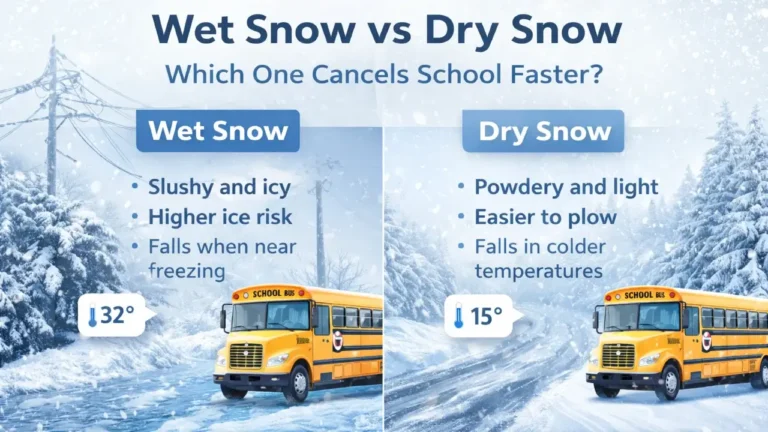
New York Early Snow Forecast: When Will the First Snow Arrive This Year?
Early-season snow in New York is never predictable. Some years bring the first flakes in early October, while others wait until December. With quick temperature swings, lake-effect bursts, and coastal storms, New York can jump from clear skies to heavy snow within hours.
This provides a complete early snow outlook for New York, combining real-time weather data with long-term climate patterns to help you understand when the first measurable snow is most likely to arrive.
Current Early Snow Forecast for New York (Live Updates)
Enter your ZIP code below to see updated snowfall chance, storm timing, and freeze conditions in your area.
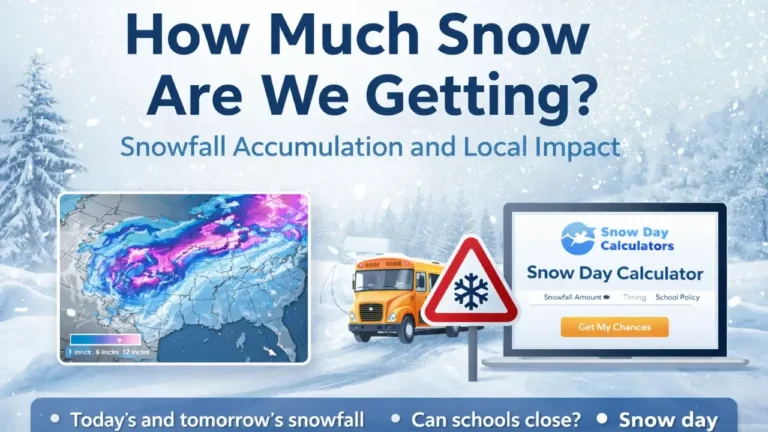
Snow Day Calculator
Instant school closure predictions for USA & Canada using live weather data.
Will you have a snow day tomorrow?
--%
--
Next days outlook
Today’s key weather conditions
Next hours forecast
This gives you instant predictions for:
- First snowfall potential
- Early snow accumulation
- Freezing temperatures
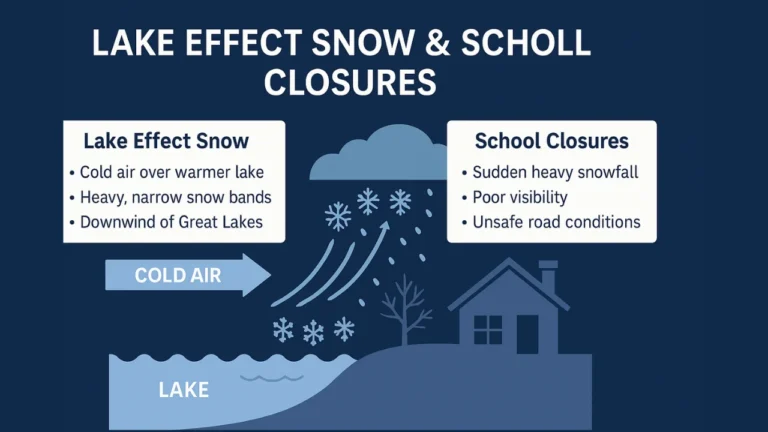
- Lake-effect bursts
- Low-pressure coastal systems
- Chances of school closures
Because New York weather shifts rapidly, checking a real-time forecast is more accurate than relying on historic averages alone.
Early Snow Patterns Across New York State
New York’s first snow depends heavily on region. Upstate areas receive early snow far more often than NYC and Long Island.
Downstate (NYC, Long Island, Westchester)
Downstate New York usually sees its first measurable snow in late November or early December. Warm ocean water and urban heat keep temperatures above freezing during early fall, delaying accumulation. Early-season snow events are often light flurries that melt quickly.
Upstate & Western New York (Buffalo, Rochester, Syracuse)
These areas regularly see October snow, with some years producing flakes in late September. Cold Canadian air, combined with moisture from Lakes Erie and Ontario, creates strong early-season lake-effect snow.
Hudson Valley & Eastern NY (White Plains, Poughkeepsie, Albany)
These regions can experience early snow in late October through early November. Cold air from the Adirondacks moves south early in the season, which increases chances of the first snowfall before NYC sees anything.
What Causes Early Snow in New York?
Early-season snowfall is driven by a few powerful atmospheric factors:
Jet Stream Position
When the jet stream dips south over New York, cold Canadian air moves in early, increasing the chance of snowfall.
Lake-Effect Snow
Western and central New York get early snow due to warm lake water colliding with cold air, producing narrow but intense bands of snow.
Arctic Cold Fronts
Sudden early-season temperature drops often set the stage for the year’s first snow event.
Coastal Lows & Nor’easters
A strong coastal system can bring early snow to downstate regions, especially if cold air arrives in advance.
Overnight Freeze Cycles
If early fall nights drop below freezing, even small precipitation can turn to flurries.
New York Early Snow Forecast by Region
Below is a region-by-region outlook for the upcoming early snow period.
New York City (10001) Early Snow Forecast
NYC’s first measurable snow typically arrives in late November or early December. The city rarely sees October snow due to high ground temperatures and surrounding warm water. Flurries may appear earlier, but significant accumulation before Thanksgiving is uncommon.
Buffalo (14201) Early Snow Forecast
Buffalo can see snow as early as early October. Lake-effect bands often produce the first measurable snowfall long before the rest of the state experiences winter conditions.
Rochester (14604) Early Snow Forecast
Rochester also receives early lake-effect events, with first snow often arriving in late October. Some seasons bring early-season lake-effect storms by mid-October.
Syracuse (13202) Early Snow Forecast
Syracuse regularly sees its first snow in late October. Early cold fronts from the north collide with moist lake air, bringing above-average early snow potential.
Albany (12207) Early Snow Forecast
Albany often records early snow in late October or early November. Surges of cold air from the Adirondacks commonly produce the first flurries before NYC sees any snow.
📊 Historical First Snow Dates in New York
| Region | Avg First Snow | Earliest Snow Recorded |
|---|---|---|
| NYC | Late Nov–Early Dec | October |
| Long Island | Early Dec | Early Nov |
| Buffalo | Late Oct | September |
| Syracuse | Late Oct | October |
| Albany | Early Nov | October |
| Hudson Valley | Early Nov | Late Oct |
These averages show that early snow is normal in upstate regions but less common in NYC and surrounding areas.
Is Snow Coming to New York Soon? (Short-Term Outlook)
Early-season outlooks focus on:
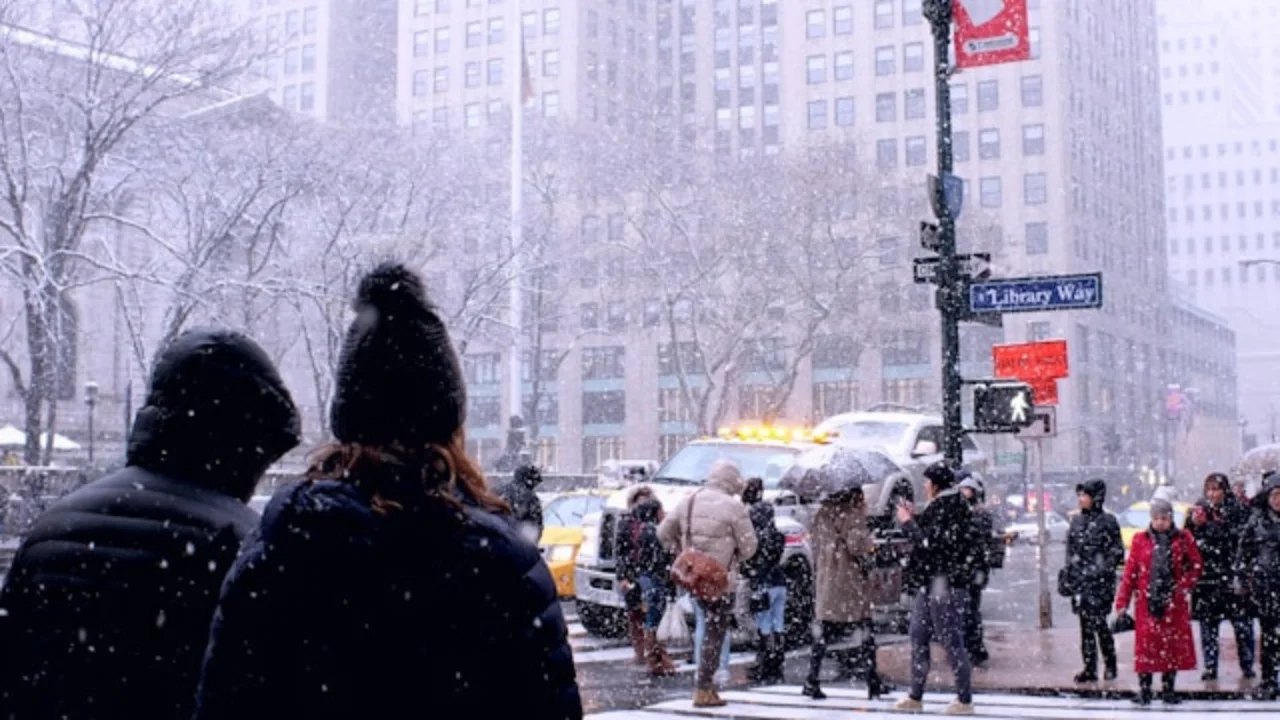
7-Day Early Snow Potential
Short-range models highlight:
- Overnight freezing
- Incoming cold fronts
- Moisture-rich storm systems
- Lake-effect band setup
14-Day Long-Range Early Snow Indicators
Longer forecasts look at:
- Jet stream shifts
- Arctic blasts
- Pressure patterns
- Ocean temperature changes
Early-Season Snow Storm Watch
Coastal storms combined with cold air can bring significant early snow even before Thanksgiving.
Lake-Effect Early Snow Watch
Buffalo, Syracuse, and Rochester remain most at risk for early heavy accumulation.
How Early Snow Impacts New York Schools
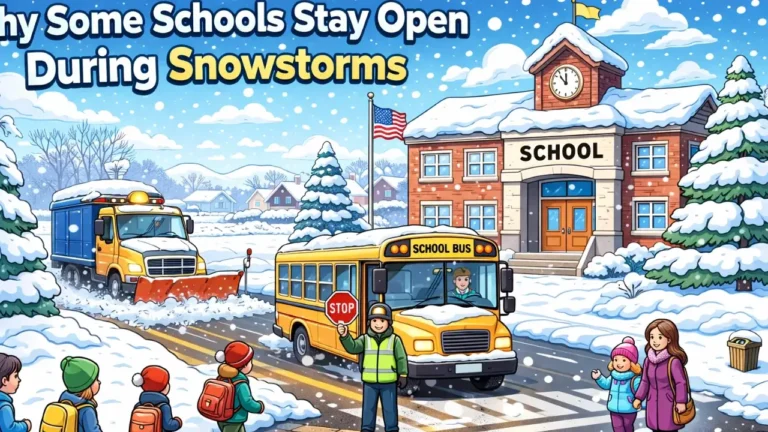
Early snow does not always lead to school closures, especially in upstate areas. School districts typically evaluate:
- Road and bus route safety
- Timing of snowfall (morning storms cause more closures)
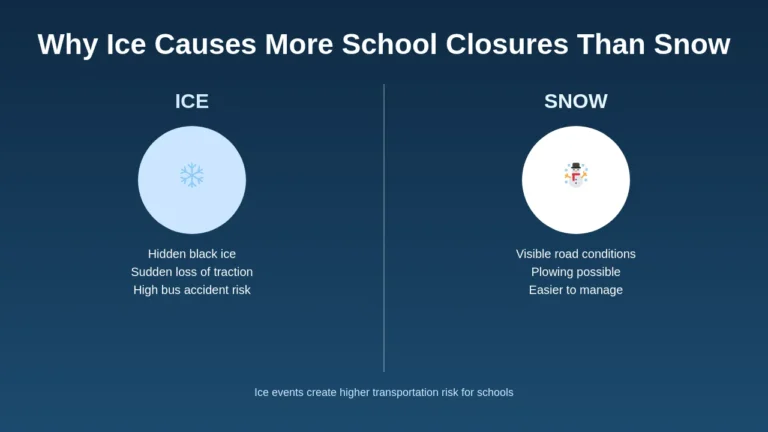
- Freezing rain or ice potential
- Visibility issues
- Wind speeds
Downstate districts (NYC, Long Island) are more likely to close with lower snow totals. Upstate districts often remain open unless roads are dangerous or visibility is reduced.
To check the latest school closure probability based on snowfall, temperature drops, ice risk, and storm timing, use our snow day predictor.