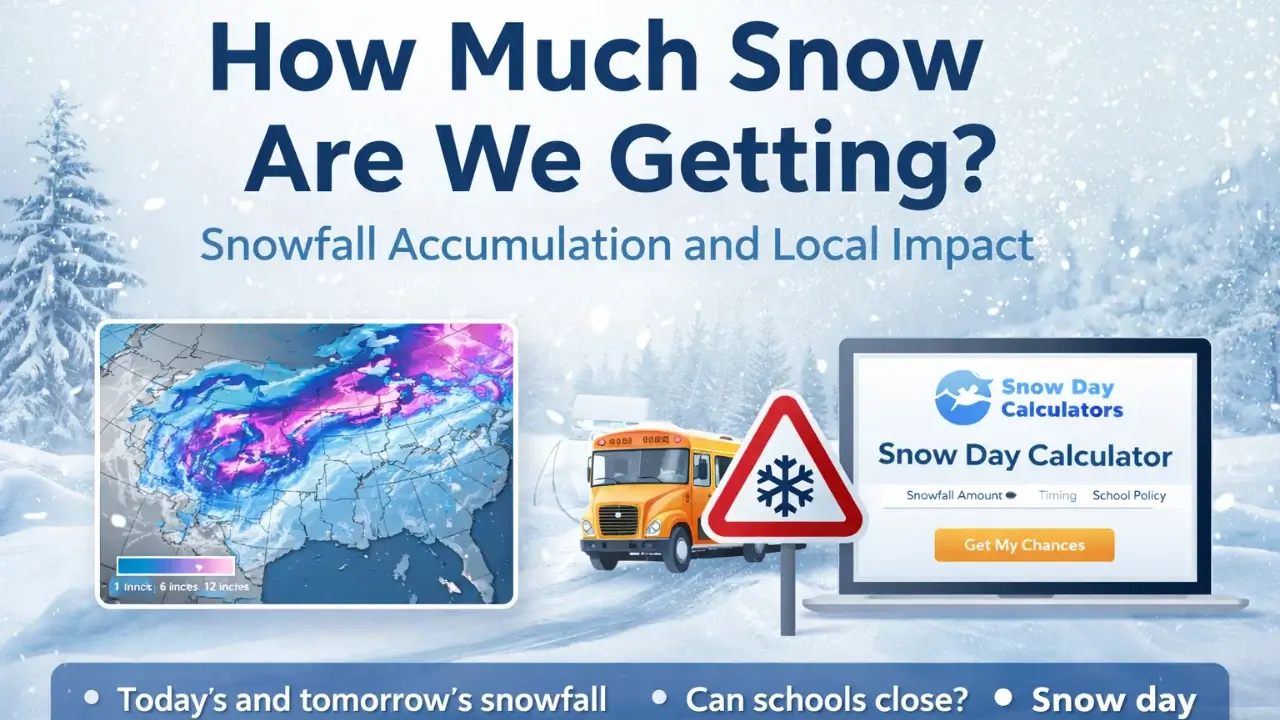
How Much Snow Are We Getting? Snowfall Accumulation and Local Impact
When snow is in the forecast, the first question people ask is simple.
How much snow are we getting?
The answer is not always simple.
Snowfall totals depend on location, temperature, timing, and storm behavior. A few inches can cause no disruption in one area and lead to school closures in another. This page explains how snowfall amounts are measured, why forecasts change, and how snow totals affect daily decisions like travel and school schedules.
What Does “How Much Snow Are We Getting” Mean?
When weather reports mention snow amounts, they usually refer to snowfall accumulation.
Snowfall accumulation is the amount of snow that stays on the ground. It is measured in inches over a specific time period. This is different from snowfall rate, which describes how fast snow is falling.
Several factors affect accumulation:
- Ground temperature
- Air temperature
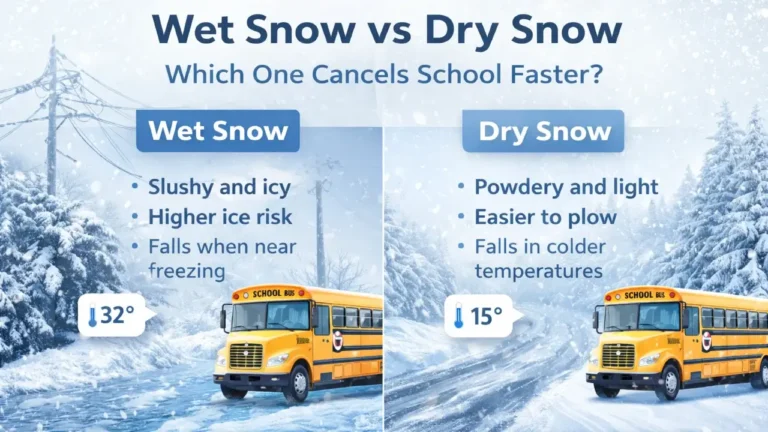
- Snow type (wet or dry)
- Wind and drifting
- Sun angle and time of day
Because of this, two areas close to each other can see very different totals from the same storm.
How Snowfall Amounts Are Forecast
Snowfall forecasts come from weather models that simulate how storms develop and move. These models update several times a day as new data becomes available.
Weather Models and Forecast Updates
Forecast models use satellite data, radar, and surface observations. They estimate where precipitation will fall and what form it will take. Small changes in storm track or temperature can shift snowfall totals significantly.
This is why snow forecasts often change overnight.
Factors That Change Snow Totals
Snow accumulation can increase or decrease due to:
- Temperature hovering near freezing
- Wind pushing snow bands north or south
- Lake-effect snow near large bodies of water
- Mixing with sleet or freezing rain
These factors explain why early forecasts should be viewed as estimates, not guarantees.
How Much Snow Are We Getting Today?
Snowfall today usually affects travel and daytime school schedules.
Forecasts focus on:
- Inches expected during daylight hours
- Road conditions during peak commute times
- Visibility and plowing response
Light snow during the day may not disrupt schools. Heavier snow that starts early can cause delays or closures, especially if roads become slick before buses run.
Snowfall totals today matter most during the morning commute and school hours. Many parents check estimated snowfall first, then look at overall school closure risk using a snow day calculator to understand how weather conditions may affect local decisions.
How Much Snow Are We Getting Tonight?
Overnight snow often plays a larger role in school decisions than daytime snow.
Nighttime snowfall matters because:
- Roads may not be fully treated by morning
- Temperatures often drop, increasing ice risk
- Early morning travel becomes more dangerous
Even modest overnight accumulation can lead to delays or closures if combined with freezing conditions.
How Much Snow Are We Getting Tomorrow?
Tomorrow’s forecast is where uncertainty matters most.
School districts often decide early in the morning or late the night before. They consider:
- Expected snowfall before buses run
- Timing of the heaviest bands
- Confidence in the forecast
If models disagree, districts may take a cautious approach. This is why tomorrow’s snow forecast can change several times before a final decision is made.
How Much Snow Are We Getting This Week?
Weekly snowfall totals help explain longer disruptions.
Multiple small snow events can create more impact than one large storm. Snow that does not fully melt adds up over time. Plowing, snowbanks, and icy patches become harder to manage.
School districts watch cumulative totals closely, especially during active winter patterns.
Snowfall Amounts by Day of the Week
Many searches focus on specific days such as Saturday, Sunday, or Thursday.
Snowfall by day depends on storm timing. A storm arriving late Friday night may affect Saturday travel. A Sunday system may influence Monday school decisions.
Rather than focusing on the day name alone, it is more accurate to look at when the snow falls and how long it lasts.
How Many Inches of Snow Affect School Closures?
There is no universal rule. However, most districts follow similar patterns.
Light Snow (1–3 Inches)
- Roads usually remain manageable
- Schools often stay open
- Delays are rare
Moderate Snow (4–6 Inches)
- Bus routes become difficult
- Delays are common
- Closures increase if snow falls overnight
Heavy Snow (7+ Inches)
- Travel becomes unsafe
- Closures are likely
- Emergency planning may begin
Ice Without Snow
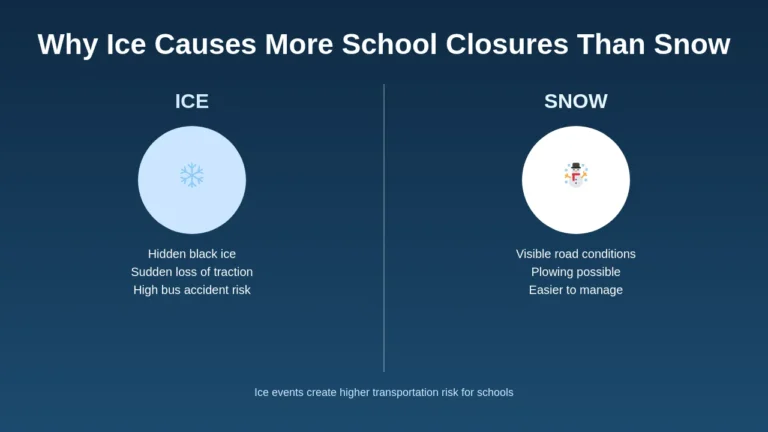
Freezing rain can be more dangerous than snow. Many schools close with minimal snowfall if ice is present.
There is no single snowfall amount that triggers closures everywhere. School districts follow different thresholds based on climate, infrastructure, and experience. These differences are easier to understand when you look at snow day chances by state, rather than relying on one national rule.
Why Snow Amount Alone Does Not Decide a Snow Day
Snow totals are only one part of the decision.
Districts also consider:
- Road treatment effectiveness
- Bus transportation safety
- Rural versus urban conditions
- Staff and student travel distances
Two districts with the same snowfall can make different decisions based on local conditions and policies.
Check Snow Day Chances Based on Your Location
Snow impacts vary by region. Local weather patterns, infrastructure, and school policies all matter.
Location-based tools help estimate how likely a snow day is in your area by combining snowfall amounts with other factors. State-specific differences play a major role in these predictions.
Frequently Asked Questions
Final Note
Snowfall totals help explain what is happening, but impact explains why decisions are made. Understanding both gives a clearer picture of what to expect when winter weather arrives.