How to Drive in Snow Safely
Driving in snow requires a different approach than normal road conditions. Snow reduces traction, increases stopping distance, and limits visibility. Many winter accidents happen not because of severe storms, but because drivers underestimate how snow affects vehicle control. Even a thin layer of snow can change how a car accelerates, brakes, and turns.
Learning how to drive in snow safely helps reduce risk for drivers, passengers, and others on the road. Proper preparation and calm driving habits make a major difference during winter travel.
This guide explains how to drive in snow using clear, practical steps. It covers preparation, driving techniques, and common mistakes so you can make safer decisions when roads are covered in snow or ice.
Why Driving in Snow Is Dangerous
Snow changes how vehicles behave on the road. Tires lose grip when snow covers the surface. This reduces traction and makes it harder to control speed and direction. Even modern safety systems cannot fully compensate for poor road grip.
Stopping distance increases on snowy roads. A car that stops quickly on dry pavement may need several times more distance to stop on snow. Sudden braking often causes wheels to lock or slide.
Visibility is another major risk. Falling snow, fog, and spray from other vehicles reduce how far drivers can see. Lane markings and road edges may disappear under snow. Ice often forms beneath snow, creating black ice that is hard to see. Ice reduces traction more than snow and is harder to detect, which makes winter driving especially dangerous.. Bridges, overpasses, and shaded areas freeze first. Because of these factors, small driving mistakes become serious hazards in snowy conditions.
How to Prepare Before Driving in Snow
Preparation reduces risk before you even start the engine. Snowy roads are less forgiving, so small issues can quickly turn into dangerous situations. Taking a few minutes to prepare helps avoid problems later.
Check Weather and Road Conditions
Always check the weather forecast before driving. Look for snowfall intensity, ice warnings, and wind conditions. Pay attention to overnight temperature changes, as melting snow can refreeze into ice by morning.
Check local road condition reports if available. Plowed main roads may be safer than side streets.
Prepare Your Vehicle
Your vehicle must be ready for winter conditions. Make sure tires have proper tread depth. Worn tires reduce grip on snow. Check tire pressure, as cold weather lowers air pressure.
Ensure windshield wipers work properly. Use winter windshield fluid to prevent freezing. Confirm headlights, brake lights, and turn signals are clear and working.
Clear Snow and Ice Completely
Remove snow and ice from all windows and mirrors. Clear the windshield fully, not just a small viewing area. Clean side windows, rear glass, mirrors, headlights, and taillights.
Remove snow from the roof if possible. Snow can slide forward during braking and block visibility. Proper preparation improves visibility and vehicle control before you start driving.
How to Drive in Snow (Step-by-Step)
Driving in snow requires smooth, controlled movements. Sudden actions increase the risk of skidding or losing control.
Follow these steps to stay safer on snowy roads.
Drive Slower Than Normal
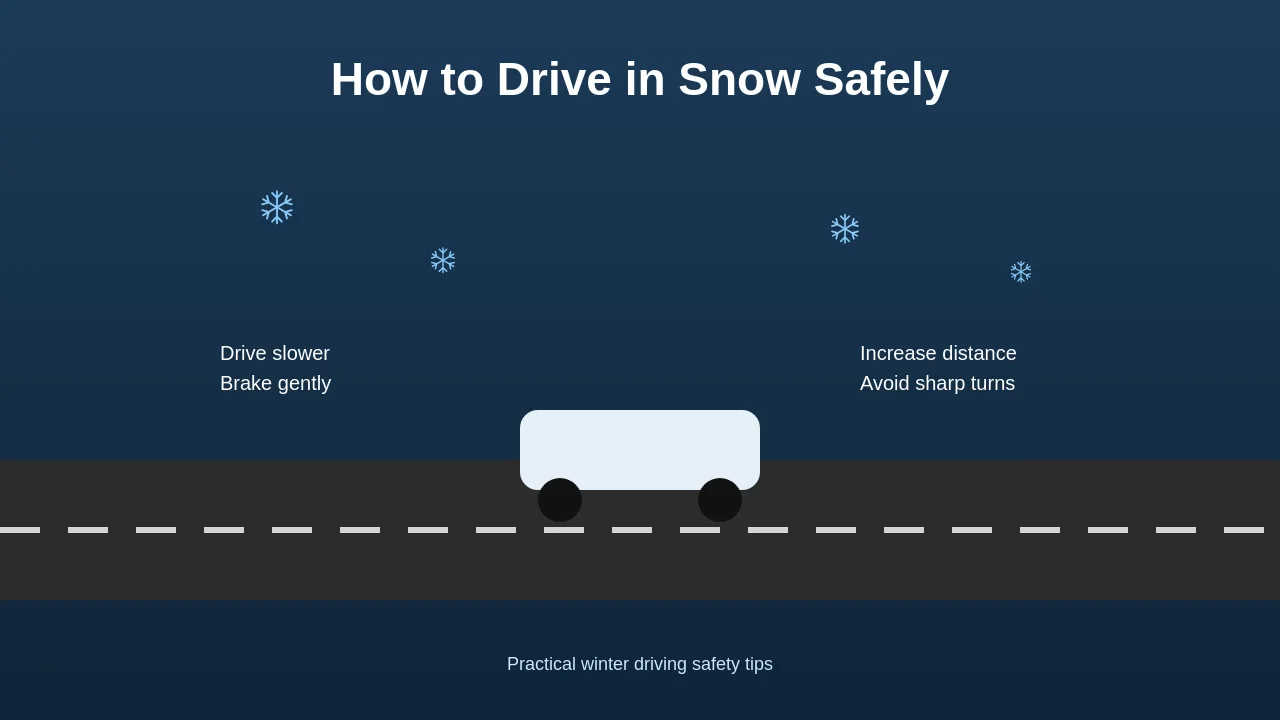
Reduce your speed well below normal limits. Speed limits are set for dry conditions, not snow. Driving slower gives you more time to react and reduces the chance of losing traction.
If you feel unsure, slow down further. It is better to arrive late than not at all.
Increase Following Distance
Leave more space between your car and the vehicle ahead. On snow, stopping distance increases significantly. A safe following distance in dry weather may not be enough. Aim for at least six to eight seconds of space when roads are snowy.
Brake Gently and Early
Apply brakes slowly and with light pressure. Sudden braking can cause wheels to lock or activate ABS repeatedly. This reduces steering control. If your vehicle has ABS, press the brake firmly and let the system work. Do not pump the brakes.
Accelerate Slowly
Press the accelerator gently. Rapid acceleration causes wheel spin, especially when starting from a stop. Smooth acceleration helps maintain traction and control. If wheels begin to spin, ease off the accelerator until traction returns.
Steer Smoothly
Make slow and gentle steering movements. Sharp turns increase the risk of skidding. Turn the wheel gradually and avoid quick corrections. If the car begins to slide, ease off the pedals and steer calmly in the direction you want the front of the car to go.
How to Handle Skidding on Snow
Skidding happens when tires lose traction and slide across the road surface. Staying calm and reacting correctly helps regain control.
Front-Wheel Skid
A front-wheel skid occurs when the front tires lose grip and the car does not turn as expected. Ease off the accelerator and brakes. Do not turn the wheel sharply. Allow the front tires to regain traction, then steer gently in the desired direction.
Avoid sudden movements, as they can worsen the slide.
Rear-Wheel Skid
A rear-wheel skid happens when the back of the car slides sideways. Take your foot off the accelerator. Steer smoothly in the direction the rear of the car is sliding. This helps realign the vehicle.
Once control returns, straighten the steering wheel gradually.
What Not to Do During a Skid
Do not slam the brakes.
Do not oversteer.
Do not panic.
Sudden actions reduce traction and make the skid harder to control.
How to Drive in Snow With Different Vehicles
Not all vehicles handle snow the same way. Understanding how your vehicle behaves helps you drive more safely.
Front-Wheel Drive (FWD)
Front-wheel drive vehicles generally perform better in snow than rear-wheel drive cars. The engine’s weight sits over the drive wheels, which improves traction. This helps during acceleration and light climbing.
However, FWD vehicles can still skid if driven too fast. Smooth steering and gentle braking remain important.
Rear-Wheel Drive (RWD)
Rear-wheel drive vehicles are more challenging in snowy conditions. The drive wheels have less weight over them, which reduces grip. This increases the chance of spinning or fishtailing.
If you drive a RWD vehicle, reduce speed further and avoid sudden throttle input. Extra caution is necessary on hills and turns.
All-Wheel Drive (AWD) and Four-Wheel Drive (4WD)
AWD and 4WD systems help with traction during acceleration. They do not improve braking or turning on snow or ice. This is a common misunderstanding.
Drivers with AWD or 4WD should still slow down and maintain safe following distances.
How Much Snow Is Too Much to Drive In?
There is no single snow depth that is safe for all vehicles. Light snow on plowed roads is usually manageable with caution. Deeper snow reduces traction and can block visibility and control. Once snow becomes deep enough to drag under the vehicle or reduce tire contact with the road, driving becomes unsafe. Unplowed roads increase this risk quickly.
Ice changes the situation entirely. Even a small amount of ice can make driving dangerous, regardless of snow depth. If roads are unplowed, visibility is poor, or freezing rain is expected, it is safer to delay travel.
Common Mistakes When Driving in Snow
Many winter driving accidents happen because of avoidable mistakes.
One common mistake is driving too fast. Speed reduces reaction time and increases stopping distance on snow. Another mistake is braking suddenly. Hard braking often causes skidding and loss of steering control.
Some drivers rely too much on all-wheel drive. AWD helps with acceleration but does not prevent sliding. Failing to clear snow from windows, lights, and mirrors reduces visibility and puts others at risk. Ignoring ice warnings is also dangerous. Ice often forms even when roads appear clear.
Avoiding these mistakes improves safety for everyone on the road.
When You Should Avoid Driving in Snow
Sometimes the safest decision is not to drive at all.
Freezing rain creates extremely slippery conditions that are difficult to manage, even at low speeds. If ice is expected, delaying travel is often the safest option.
Whiteout conditions reduce visibility to near zero. In these situations, drivers cannot see road edges, signs, or other vehicles.
Overnight temperature drops can turn wet roads into ice by morning. Early hours are often the most dangerous.
If local authorities issue travel warnings or road closures, follow their guidance. Avoiding unnecessary trips reduces risk for you and others.
Frequently Asked Questions
Final Thoughts
Driving in snow requires patience and awareness. Smooth steering, gentle braking, and reduced speed help maintain control. Preparation before driving is just as important as technique on the road. Not every winter condition is safe for travel. In severe snow or ice, delaying a trip is often the safest decision. Understanding how snow affects driving helps reduce risk and keeps roads safer for everyone.