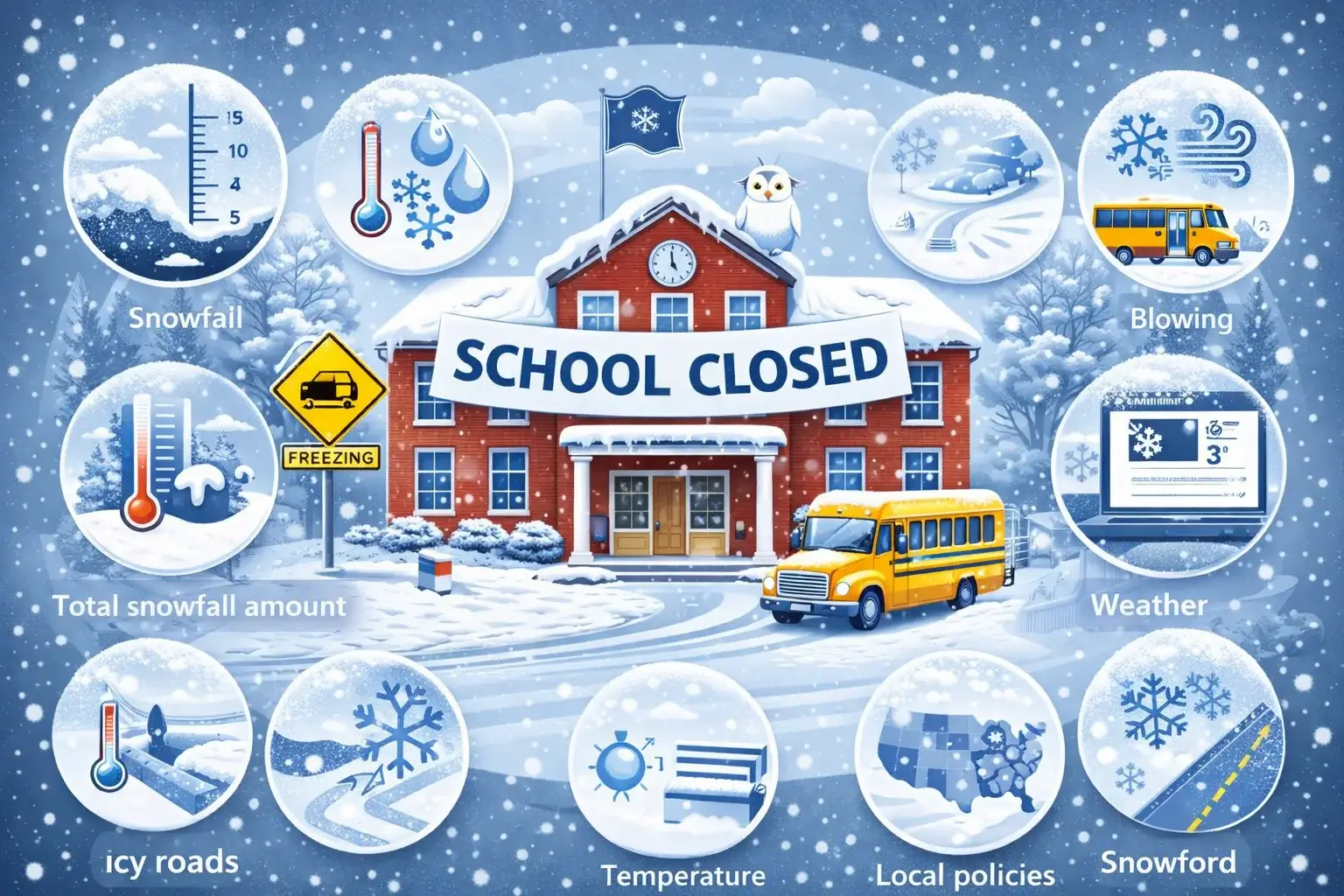
School closures during winter are rarely based on one condition.
Snowfall matters, but it is only part of the decision.
School administrators review several safety and weather factors before announcing a snow day. Understanding these factors helps parents, students, and teachers plan ahead. It also explains why two nearby districts may make different decisions on the same day.
Below are the 10 most important factors that influence whether schools close due to snow.
Why Do Schools Close for Snow?
Schools close for snow when weather conditions make travel unsafe for students and staff. The most common reasons include heavy snowfall, icy roads, poor visibility, extreme cold, and unsafe school bus routes. Each district evaluates these risks using local weather data and safety policies before making a decision.
How Schools Decide Whether to Close for Snow
School closure decisions are made by district officials, not weather apps.
They focus on student safety, transportation risks, and local conditions.
Administrators review weather forecasts, road reports, and past experience. Many districts also consult transportation departments and local authorities before deciding.
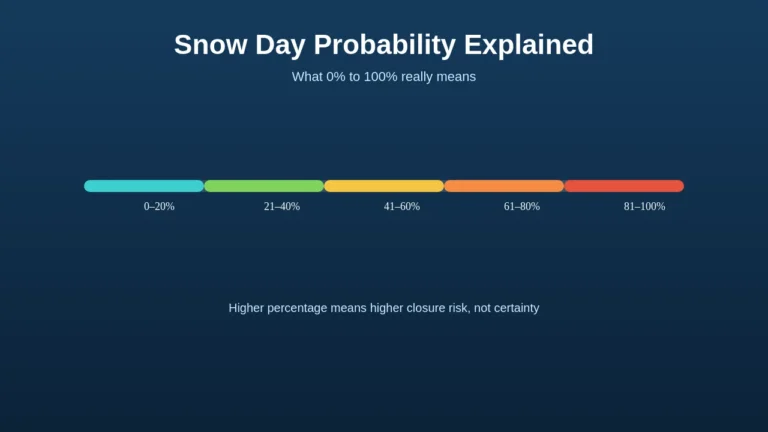
Tools that estimate snow day chances use these same signals to provide guidance. For example, a snow day probability tool helps families understand risk levels before official announcements are made.
What Factors Do Schools Consider Before Closing for Snow?
Snow day calculators use these factors to estimate closure chances, helping families understand potential risks before official announcements.
- Total snowfall amount
- Timing of snowfall
- Ice and freezing rain risk
- Road conditions
- Temperature and wind chill
- Visibility levels
- School bus safety
- Local district policies
- Weather forecast confidence
- Past snow day history
Top 10 Factors That Make Schools Close for Snow
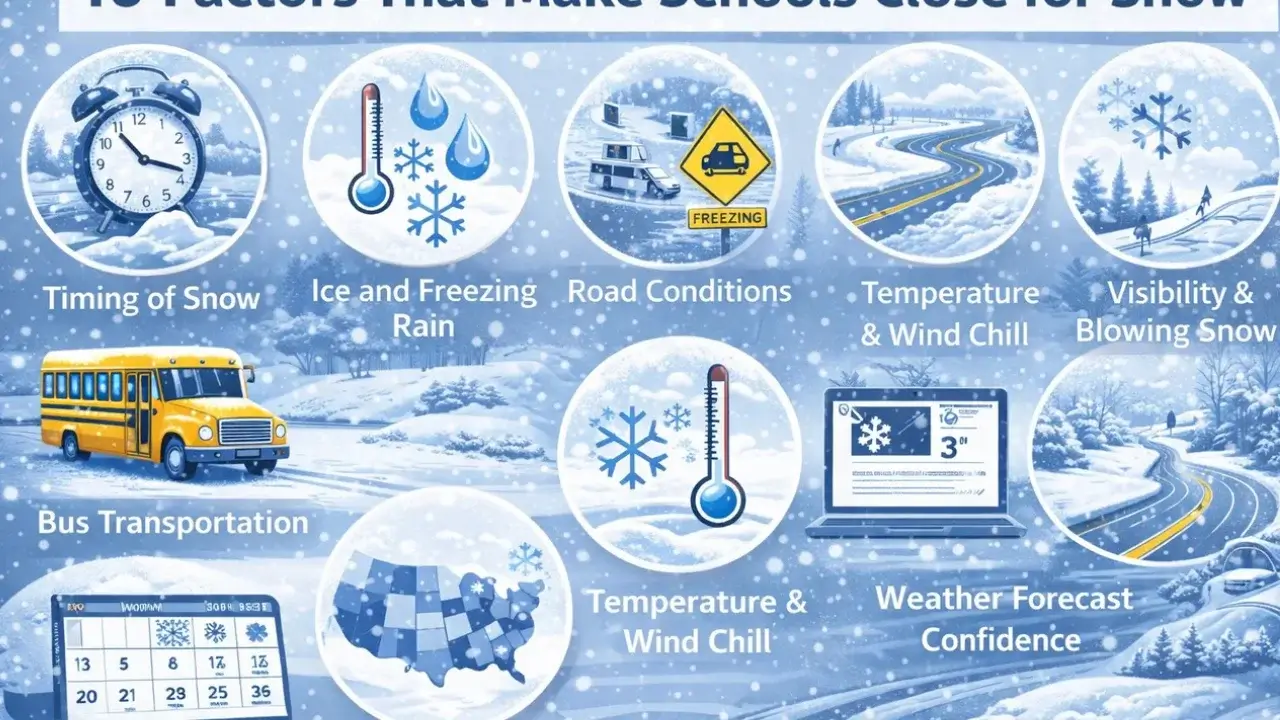
1. Total Snowfall Amount
Snow accumulation is the most visible factor.
Light snowfall often causes delays, not closures. Heavy snowfall increases closure chances, especially when it exceeds local clearing capacity.
What matters is not just how much snow falls, but how fast it accumulates. Rapid accumulation overnight creates dangerous morning conditions.
How Much Snow Usually Causes Schools to Close?
There is no fixed snowfall amount that guarantees a school closure. In many areas, 3 to 6 inches of snow increases closure chances, while icy conditions or fast overnight accumulation can close schools with less snow.
2. Timing of Snowfall
Timing can matter more than totals.
Snow falling overnight affects early morning travel. Plows may not finish clearing roads before buses begin routes.
Daytime snowfall may allow schools to open and dismiss early instead of closing completely. This is why timing is a core signal used in snow day prediction models.
3. Ice and Freezing Rain Risk
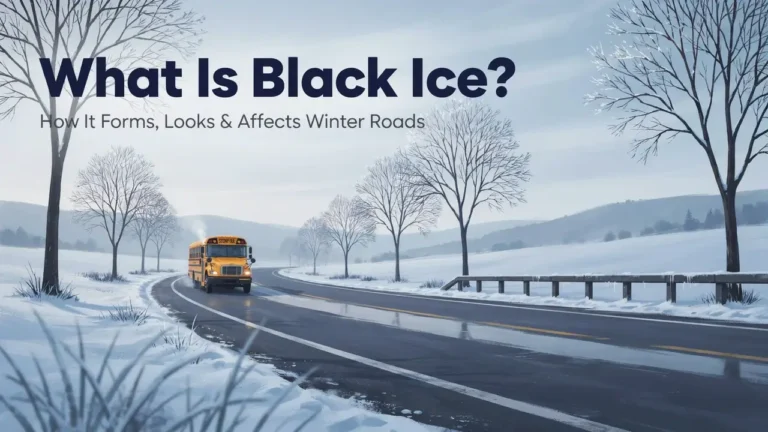
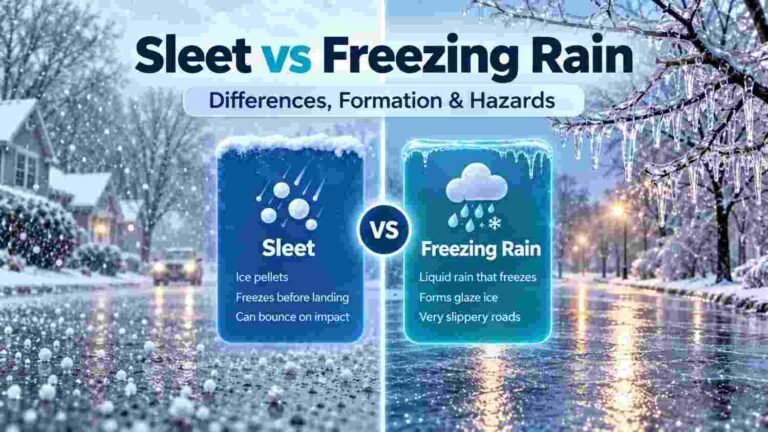
Ice is often more dangerous than snow. Freezing rain creates black ice on roads, sidewalks, and bus stops.
Even a thin ice layer can make travel unsafe. Many districts close schools for ice events even when snowfall totals are low.
Is Ice Worse Than Snow for School Closures?
Yes. Ice is often more dangerous than snow because it creates slippery roads and sidewalks, increasing accident risk even when snowfall totals are low.
4. Road Conditions and Plowing Capability
Road safety varies by location. Urban areas usually have faster snow removal. Rural districts rely on fewer plows and longer routes. Bus routes often include side roads that are cleared later. If those roads remain unsafe, schools are more likely to close.
5. Temperature and Wind Chill
Extreme cold affects safety beyond driving.
Low temperatures combined with wind chill increase frostbite risk. Students waiting outside for buses are especially vulnerable.
Some districts close schools during extreme cold events even without snow.
6. Visibility and Blowing Snow
Visibility affects both drivers and pedestrians. Strong winds can cause blowing snow and whiteout conditions. Even moderate snowfall becomes dangerous when visibility drops. School bus drivers must maintain clear sightlines. Poor visibility increases accident risk.
7. School Bus Transportation Safety
Bus transportation plays a major role in closure decisions. Districts consider route length, terrain, and turnaround points. Hills, bridges, and rural roads add risk during winter storms. If buses cannot operate safely, schools usually close.
8. Local School District Policies
Each district has its own risk tolerance. Some districts close early to avoid last-minute danger. Others wait until conditions worsen. Historical behavior matters. Districts that close frequently tend to do so again under similar conditions. This is why checking state-specific snow day patterns provides better insight than relying on weather alone.
9. Weather Forecast Confidence
Forecast reliability influences timing. Prediction accuracy depends on forecast stability and timing, which is why schools sometimes act early when confidence is low.
When forecasts show high uncertainty, districts may close preemptively. Rapidly developing storms are harder to manage. Schools prefer avoiding mid-day emergencies, especially during morning commute hours.
10. Past Snow Day History in the Area
Local experience shapes decisions.
Communities accustomed to winter weather stay open longer. Areas with rare snow events close sooner.
Historical closure data helps explain why similar snowfall leads to different outcomes across regions.
Why Snow Day Decisions Vary by Location
Snow day decisions are local by design.
Climate, infrastructure, and preparedness differ across states and districts. A few inches of snow in one area may shut schools down, while another region operates normally.
That is why location-based analysis is important. Reviewing snow day trends by state helps families understand how decisions are made where they live.
How Snow Day Calculators Use These Factors
Snow day calculators analyze weather data tied to these factors.
They review snowfall forecasts, temperature, wind, ice risk, and timing. Some tools also consider historical closure behavior in the area.
The result is a probability estimate, not a guarantee. Using a snow day calculator works best when forecasts are checked regularly and updated as conditions change.
Important Disclaimer About School Closures
Snow day calculators provide estimates only.
They do not replace official school announcements. Final decisions are made by school districts based on real-time safety assessments.
Always confirm closures through official school or district channels.
Frequently Asked Questions
Final Thoughts
School closures depend on more than snowfall totals.
Administrators weigh safety risks, weather conditions, and local factors before deciding. Understanding these factors reduces uncertainty and helps families plan.
Snow day calculators are most useful when used alongside updated forecasts and official announcements. Check conditions regularly, especially as storms develop.