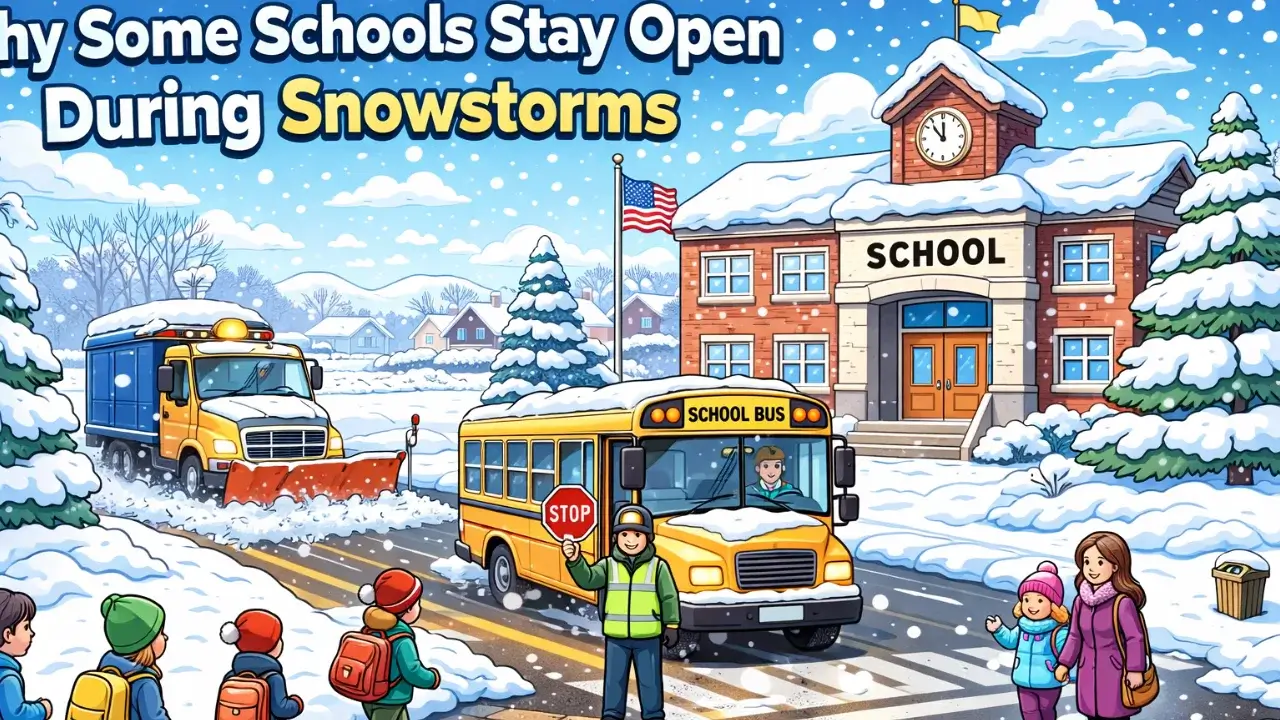
Why Some Schools Stay Open During Snowstorms
Quick answer: Schools may stay open during snowstorms if roads are safe, buses can operate, and weather conditions improve before travel times.
When heavy snow starts falling, many parents and students expect schools to close. Yet, some districts remain open even during severe winter weather.
This can cause confusion and questions about safety. The reason is simple. School closure decisions are not based on snow alone.
Each district evaluates local factors before deciding to cancel classes, delay opening, or stay open as usual.
Definition: A snow day is a school closure caused by unsafe weather conditions, not just snowfall totals.
Snowfall Amount Is Only One Factor
Many people assume a certain number of inches automatically means a snow day.
That is rarely true.
A district that sees snow often can operate safely with higher totals.
Another district may close with much less snowfall.
What matters is not how much snow falls, but how well the area can handle it.
Experience With Winter Weather
Districts in snowy regions prepare for winter months in advance.
They often have:
- Large snow removal fleets
- Crews on standby overnight
- Established snow routes for buses
- Drivers trained for winter conditions
Because of this preparation, roads may be cleared before morning travel begins.
In these areas, staying open during a snowstorm is normal.
Road Conditions Matter More Than Snow Depth
Administrators pay close attention to road safety.
They review:
- Plowed versus unplowed roads
- Side streets used by buses
- Rural roads and hills
- Bridge and overpass conditions
Even if snow totals look high, well-treated roads can remain safe.
On the other hand, light snow combined with ice can force closures.
Timing of the Storm Is Critical
The timing of snowfall plays a major role.
Storms that:
- End before early morning
- Peak overnight
- Slow down before bus routes begin
are easier to manage.
Storms that intensify during morning travel are more dangerous.
Districts may stay open if the worst weather passes before students leave home.
Local Snow Removal Capabilities
Not all districts have the same resources.
Some have:
- Full-time plow crews
- Priority clearing for school routes
- Coordination with city or county services
Others rely on limited equipment.
A well-funded district may stay open during conditions that close neighboring schools.
Conditions vary widely, which is why snow day predictions by state can look very different across the country.
School Bus Safety Considerations
Bus transportation is often the deciding factor.
Administrators assess:
- Bus traction on hills
- Visibility during early morning hours
- Turnaround space near schools
- Rural pickup points
If buses can operate safely, schools are more likely to stay open.
If bus routes are unsafe, closures or delays become more likely.
Temperature and Wind Conditions
Cold matters as much as snow.
Districts consider:
- Extreme wind chill
- Mechanical issues with buses
- Student safety at bus stops
- Frostbite risk during waits
Very cold temperatures with low snow can still result in closures.
Mild temperatures with heavy snow may not.
School Infrastructure and Building Safety
Some schools can operate in harsh weather better than others.
Key factors include:
- Reliable heating systems
- Backup power availability
- Roof snow load limits
- Safe parking and walkways
If buildings are safe and functional, districts lean toward staying open.
Attendance and Staffing Expectations
Schools also consider whether they can operate properly.
Administrators estimate:
- Teacher availability
- Support staff attendance
- Substitute coverage
- Cafeteria and transportation staffing
If staffing levels are expected to remain adequate, schools may stay open.
Pressure to Maintain Instruction Time
Many districts face pressure to avoid closures.
Reasons include:
- Limited snow days built into calendars
- State attendance requirements
- Testing schedules
- Makeup day complications
While safety comes first, these pressures influence decisions.
Communication Delays and Decision Timing
Closure decisions are often made early. Weather conditions can change after decisions are announced.
This can lead to situations where:
- Conditions worsen after schools stay open
- Storms weaken after closures are announced
Administrators must decide with incomplete information.
Why Nearby Districts Can Decide Differently
It is common for neighboring districts to make opposite decisions.
This happens because:
- Road networks differ
- Bus routes vary
- Urban and rural conditions change quickly
- Snow bands affect areas unevenly
What is unsafe in one area may be manageable in another.
Role of Snow Day Prediction Tools
Snow day tools help estimate closure chances.
They often analyze:
- Forecast snowfall
- Temperature trends
- Wind and ice risk
- Historical closure patterns
These tools provide guidance, not guarantees. Final decisions always come from school officials.
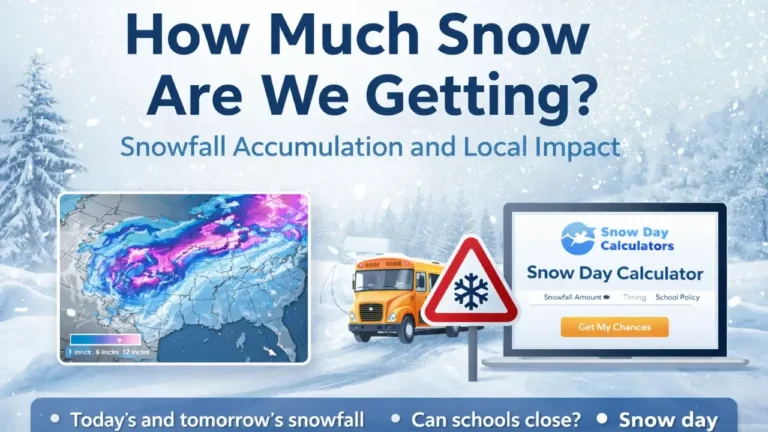
Students often check a Snow Day Calculator to estimate closure chances, but final decisions still come from districts.
When Staying Open Makes Sense
Schools may remain open during snowstorms when:
- Roads are treated early
- Snowfall is steady but manageable
- Buses can operate safely
- Temperatures remain moderate
In these cases, staying open may be the safest option.
When Closures Are More Likely
Closures become more likely when:
- Ice is present
- Visibility is poor
- Snow falls during commute hours
- Rural roads remain untreated
- Wind chills reach dangerous levels
These conditions raise risk beyond acceptable limits.
Understanding the Bigger Picture
It can feel frustrating when schools stay open during bad weather.
However, decisions are rarely careless.
They are based on:
- Local conditions
- Safety assessments
- Experience with winter operations
- Available resources
What looks unsafe from one location may be manageable overall.
FAQ
Final Thoughts
Snowstorms affect every district differently. Staying open does not mean safety is ignored. Closing does not mean caution was lacking. Each decision reflects local realities, not just snowfall totals. The best approach is to stay informed, follow official updates, and understand that no single rule applies everywhere.