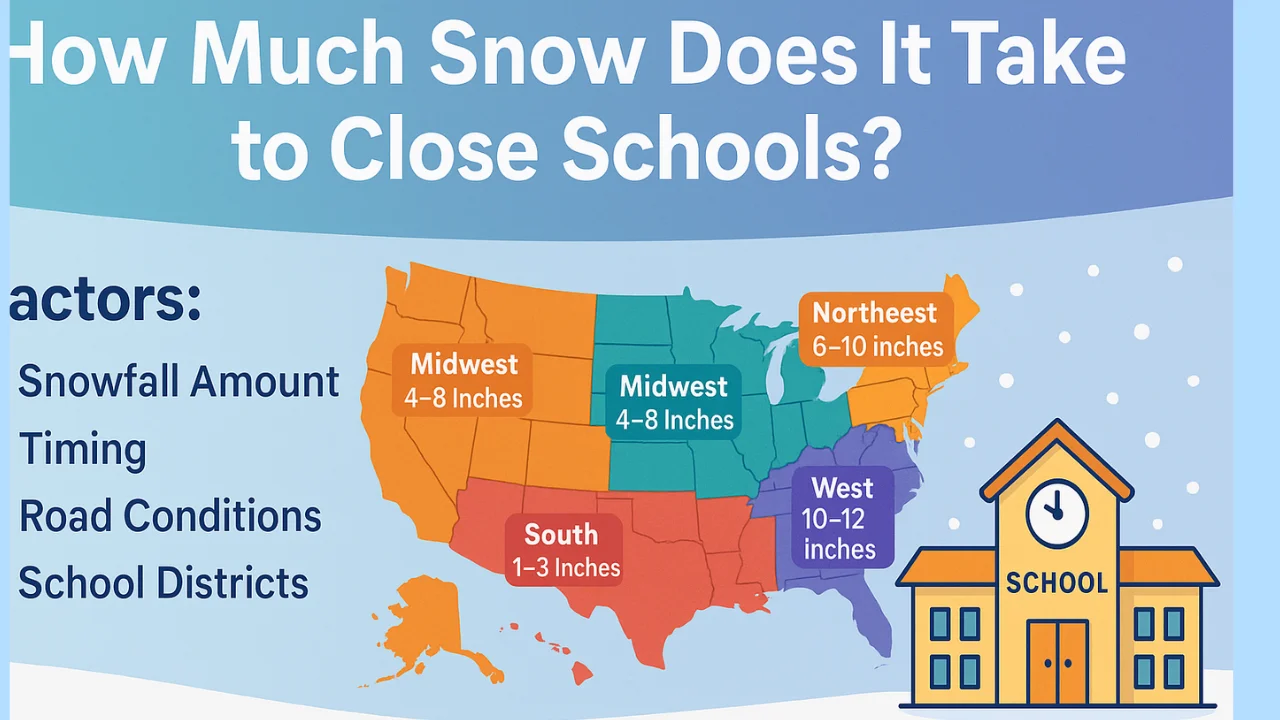
How Much Snow Does It Take to Close Schools? State-by-State Guide
School closures during winter depend on many factors. Snow depth is important, but it is not the only part of the decision. Road conditions, timing, temperature, and school district planning all play a part. Each region follows its own pattern based on local weather and available resources. This guide explains how much snow usually leads to school closures and why the answer changes from state to state.
Why Schools Close When It Snows
Districts focus on safety. Heavy snow makes travel difficult for students, teachers, and bus drivers. Even small changes in weather can disrupt morning routines and transportation plans.
Student and Staff Safety Comes First
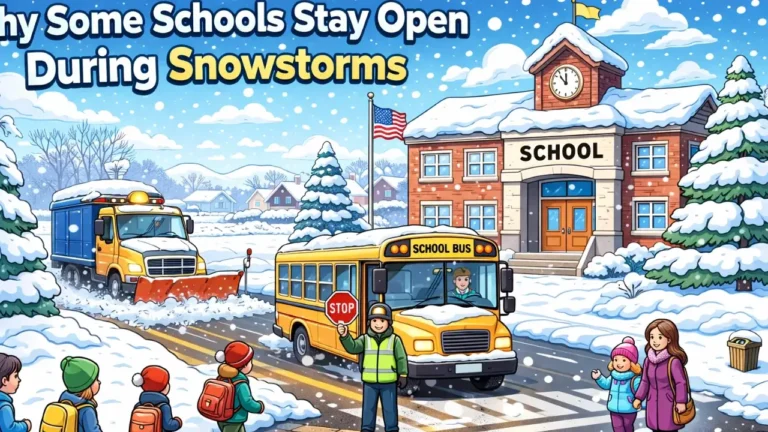
District leaders review travel routes and bus schedules. They check if buses can reach every area. They also consider whether students can walk safely on sidewalks and crosswalks. If roads become slippery or visibility drops, the risk rises.
Travel Conditions Often Matter More Than Snowfall Amount
Three inches of dry snow may not cause any issue. Two inches of wet, heavy snow may create dangerous ice patches. Some storms produce fast bursts that overwhelm plows. Others stay light and spread out. Districts consider all of these details before making a call.
Timing of the Snowfall Affects the Decision
Storm timing often controls whether a district closes. Snow that falls during the night gives crews time to clear roads. Snow that starts before dawn can block roads right before morning travel. A storm that peaks at 7 am creates far more risk than one that peaks at midnight.
Key Factors That Decide Snow Day Thresholds
School closures follow a pattern. The amount of snow is only one part of the formula.
Snowfall Amount
Most school closures occur when snow ranges between four and eight inches. Some districts close earlier. Some stay open until snow reaches higher totals. The final choice depends on local habits and road support systems.
Type of Storm
Storm type changes everything.
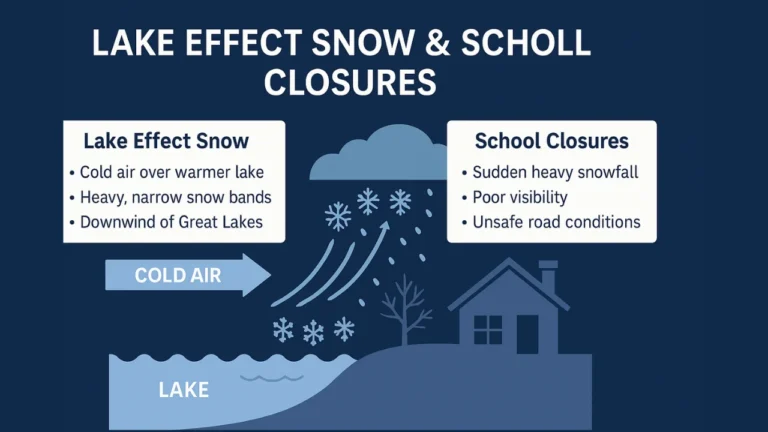
- Lake-effect snow forms sudden bands that drop heavy snow in minutes.
- Nor’easter storms build slowly but last longer.
- Short snowbursts hit fast and cause immediate visibility issues.
Each type creates a different level of risk.
Road and Sidewalk Conditions
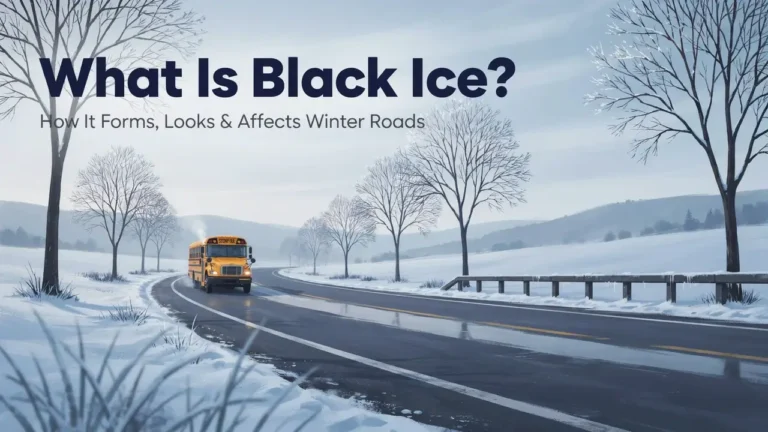
Districts often close even during low snowfall if roads turn icy. A thin layer of ice can stop buses from climbing hills or stopping safely.
Wind, Visibility, and Temperature
Snow drifts across rural roads when wind speeds rise. Low visibility creates trouble for both cars and walkers. Very low temperatures freeze slush and turn it into hard ice.
School District Resources
Large districts in northern states maintain strong fleets of plows and salt trucks. Rural districts may not clear long routes in time. This difference affects how much snow leads to a closure.
State-by-State Snow Day Thresholds (2025 Update)
Districts across the country show clear patterns. These ranges summarize common behavior based on recent winters. Individual schools may differ, but these values help form a general guide.
Northeast Region
Includes New York, New Jersey, Massachusetts, Connecticut, and Pennsylvania.
Schools in this region often close at six to ten inches of snow. Urban districts might stay open longer if roads remain clear. Nor’easter storms tend to cause faster closures because they include strong winds and long snowfall periods.
Midwest Region
Includes Ohio, Michigan, Wisconsin, Minnesota, and Illinois.
Closure thresholds range from four to eight inches. Lake-effect regions close sooner because snowfall can rise quickly without warning. Rural districts close earlier when plows cannot reach all roads.
Mountain and Northern Plains
Includes Colorado, Montana, North Dakota, South Dakota, and Wyoming.
These states show higher snow tolerance. Many districts stay open until snow reaches ten to twelve inches. However, very low temperatures and strong winds often cause closures even with low snow totals.
Southern and Mid-Atlantic States
Includes Virginia, North Carolina, Tennessee, Georgia, and Maryland.
Snow thresholds are much lower. One to three inches often close schools. Icy roads create the main risk. These states do not have large fleets of snow equipment. Even small storms can create widespread disruption.
Western and Pacific States
Includes Washington, Oregon, and parts of Northern California.
Most closures occur at four to six inches. Mountain areas close earlier due to steep roads. Coastal regions close when wet snow turns into slush and ice.
Why Some States Rarely Close Schools
Some states stay open even during deep snowfall. Their systems handle winter conditions well.
Strong Snow-Removal Infrastructure
Cities like Chicago, Denver, and Minneapolis clear roads quickly. They have plows, salt trucks, and trained crews ready to respond.
Local Experience With Winter Driving
Communities in northern states handle snowy roads with confidence. Drivers expect winter storms and know how to navigate them.
Fewer Rural Bus Routes
Shorter routes reduce exposure to risk. When routes remain manageable, districts avoid closures.
Why Other States Close Schools With Very Little Snow
Low-snow states face different challenges.
Limited Snow-Removal Equipment
Southern states do not keep large fleets of plows or salt trucks. They cannot clear roads before morning travel.
Higher Risk of Ice
Many storms in the South bring freezing rain. Ice shuts down entire areas. Even light winter weather can make roads dangerous.
Less Experience With Winter Driving
Communities unused to winter travel face higher risk. Districts choose caution to avoid accidents.
How SnowDayCalculators.io Helps Predict School Closures
The Snow Day Calculator reviews real-time conditions and local patterns. It helps students and parents understand the likelihood of a closure.
Real-Time Weather Data and Local History
The system checks snowfall totals, wind speed, visibility, and temperature. It also reviews past school closure behavior in the region.
State-Level Tolerance Factors
The tool includes state and regional differences.
- Midwest states close later.
- Southern states close faster.
- Lake-effect regions react to sudden changes.
These factors improve prediction accuracy.
Hourly Breakdown for Better Planning
Users see an hourly view of expected snowfall. This helps families judge whether a storm peaks during travel hours.
Accuracy of Snow Day Predictions
Prediction accuracy depends on where the storm hits.
Why Accuracy Varies by Region
Stable weather patterns create predictable closures. Places with sudden storm swings create more uncertainty.
States With Higher Prediction Accuracy
Michigan, Wisconsin, and Minnesota show steady patterns year after year. Their closure behavior is easier to estimate.
States That Are Harder To Predict
North Carolina, Tennessee, and Georgia vary widely because many storms include ice. Decisions shift from year to year.
FAQ
Final Thoughts
Snow totals play a major role in school closures, but timing and road conditions matter just as much. Every region follows its own pattern. The Snow Day Calculator uses these patterns to help families plan their day with confidence. Checking predictions each evening gives students and parents a clear picture of the next morning’s chances.