How Many Inches of Snow Today? Check Your Area in Seconds
Many people ask “How Many Inches of Snow Today?” when a storm is moving through their area. A fast answer helps you plan your commute, school day, or evening schedule. A clear number also helps you compare your location with nearby towns and understand the strength of the storm.
You can use the tool on our site to check how much snow has fallen today and how much more may arrive later. The tool works for any ZIP code or city and updates as new forecast data comes in. It also shows school closure chances, which is one reason many people search for snowfall information during winter storms.
This guide explains how today’s snowfall is measured, why different sources disagree, and how to track changes through the rest of the day. You will also learn what today’s snow means for travel, safety, and potential school closures.
See How Many Inches of Snow Today in Your Area
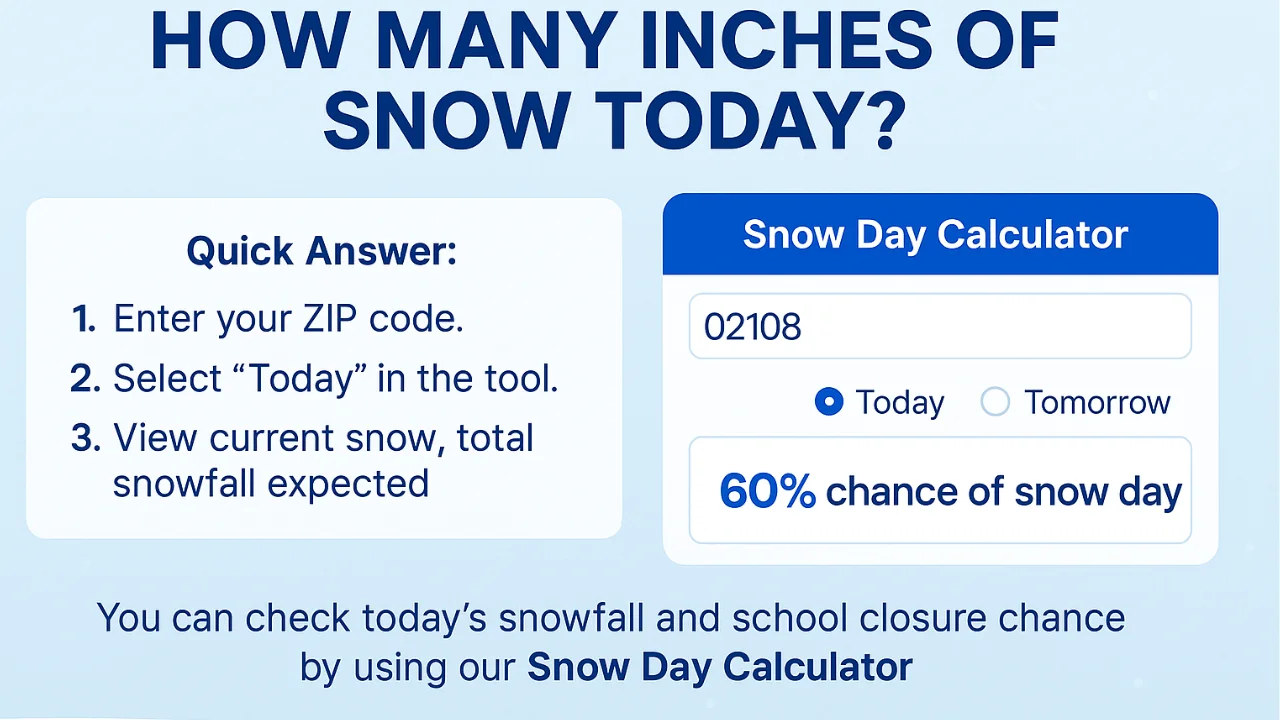
You can check today’s snowfall in seconds.
- Enter your ZIP code.
- Select “Today” in the tool.
- View current snow, total snowfall expected, and updates from the latest forecast.
The tool includes live readings, forecast maps, and short-term expectations for the rest of the day. It also reads hourly changes so you can track shifts in timing and intensity.
You can check today’s snowfall and school closure chance by using our Snow Day Calculator, which shows live updates for any ZIP code.
What “How Many Inches of Snow Today” Really Means
The question has several possible meanings. Some people want the exact amount of snow that already fell. Others want to know how much more will fall today. A third group wants the snow depth on the ground.
Snowfall so far today
This is the total snow measured from midnight to the current hour.
Snow expected for the rest of today
This is the snowfall forecast for the remaining hours of the day.
Snow depth right now
This is how much snow sits on the ground after compaction, melting, and drifting.
Our tool shows all three values when available. Snowfall and snow depth often differ, so it helps to look at both numbers.
How Meteorologists Measure Today’s Snowfall and Snow Depth
Understanding how snowfall is measured helps you make sense of today’s totals. Weather experts follow simple and consistent methods for winter measurement. Official stations use similar steps so the report stays accurate across different regions.
Snowfall vs Snow Depth
Snowfall is the amount that has fallen during a set period. Snow depth is the amount sitting on the ground at a certain time. They are not the same. Snow can compact, melt, or drift, making the depth different from the actual snowfall.
Standard Measurement Methods
Meteorologists often use snow boards. These are flat surfaces cleared after each reading. The person taking the measurement notes the snow that fell since the previous reading. This improves accuracy and avoids errors caused by compaction.
Some stations measure every six hours. Others measure every hour. This difference explains why two nearby sources may report slightly different numbers.
Why Forecast Apps, News Sites, and Neighbour Reports Differ
A weather station may be miles away. That location may receive more or less snow. Wind can blow snow off one area and pile it in another. Timing also matters. A station measuring at 6 AM and 12 PM could show a different number than someone measuring at 9 AM in their backyard.
Small differences do not mean the report is wrong. They show how varied snowfall can be across short distances.
How Many Inches of Snow Today in Different Parts of the Country
Snow varies by region. A few inches can shut down parts of the South. The same amount in northern states may cause only minor delays. It helps to know how today’s totals compare to typical winter patterns.
Low-Snow Regions
In the South and parts of the mid-Atlantic, even 1 to 2 inches can slow travel or close some services. Equipment and staff may not be ready for frequent storms. A light snow depth can still create slippery roads if the temperature drops quickly.
Snow Belt Regions
The Great Lakes and nearby areas see frequent winter storms. City crews usually respond faster because they deal with snow often. A forecast of 4 to 6 inches may feel normal. People in these regions watch for wind, ice, and timing more than raw snowfall numbers.
Mountain Regions
Mountain towns and ski areas may receive large amounts of snow today without major disruption. These places track snow depth and snowfall forecast maps more than daily totals. A mountain region can experience different conditions from a nearby valley, even within the same storm.
What Today’s Snowfall Means for Safety and Travel
Different snowfall ranges can affect visibility, road grip, and travel plans. You can use today’s totals to decide when to leave home and how to prepare for the roads.
0 to 2 Inches
This is often considered light snow. Roads may be wet or slightly slick. Sidewalks can freeze if the temperature drops later. Many drivers do not adjust speed, which leads to minor accidents.
2 to 4 Inches
This range often causes slow travel. Plows may not clear every lane yet. Ramps and bridges can freeze first. Even if the snow is light, the wind can reduce visibility in open areas.
4 to 8 Inches
This amount is a moderate winter event. Plows work longer, and travel becomes more difficult. If the snowfall continues during the morning commute, schools may delay or close.
8 Inches or More
This is a major storm in most regions. Travel delays are common. Some areas may lose power if wet snow collects on trees and lines. High wind can push snow across roads, which makes conditions more dangerous. You should check the weather forecast and the latest weather report for updated travel guidance.
How Today’s Snowfall Affects School Closures
Many people check “How Many Inches of Snow Today” to guess if school will open tomorrow. Snowfall totals matter, but they are not the only factor.
How Much Snow Leads to a Snow Day
Northern states often need 6 to 8 inches or more before schools close. Midwest districts consider wind and ice. Southern regions may close with only 1 to 3 inches. Timing is important. A small amount of snow that falls at 5 AM can create more travel problems than a larger amount that falls overnight.
Other Factors Besides Snowfall
Snow and weather timing matters. Ice risk, visibility, wind, and temperature changes play a larger role than many people expect. Bus routes may pass through shaded or untreated areas. Those roads may stay slick even when the main roads look clear.
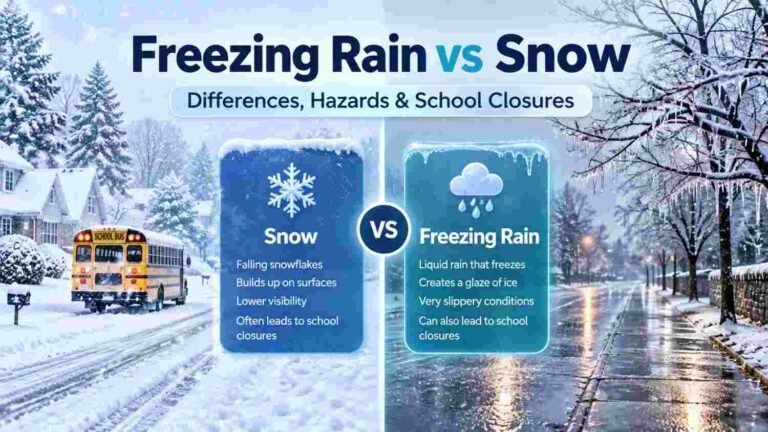
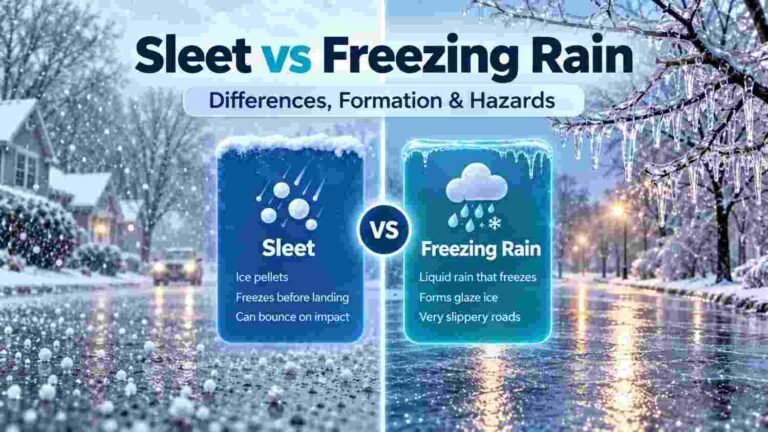
When the weather conditions show a mix of snow and freezing rain, many districts improve safety by closing or delaying school.
Checking More Than a Simple Total
A snow day decision depends on several pieces of data. It helps to review the snowfall forecast, the snow depth, wind speeds, and the chance of ice. You can test different ZIP codes using tools that show the overall chance of a snow day.
You can monitor changes through the day with our live snow forecast, which updates as conditions shift.
Where to Find Reliable Numbers for How Many Inches of Snow Today
There are several ways to check how much snow has fallen. Each source offers a different perspective.
Official Weather Services
National Weather Service and Environment Canada release updates through the day. They publish snowfall totals and the weather report for many regions. These reports form the base for many forecast apps and mapping tools.
Local Weather Stations
TV stations and newspapers share updates based on their reporters and trained observers. These sources help you see how much snow your specific county or city received.
Radar, Snowfall Maps, and Snow Depth Tools
Many sites use radar to show where the snow is. Snowfall forecast maps illustrate expected totals across a region. Snow depth tools show the level on the ground. These tools give a broader view of the storm.
Your Local Tool
Some users want a single place to check totals and understand what today’s snow means. Our tool brings several readings together. You can check forecast maps, snow depth estimates, and short-term hourly information. The tool updates throughout the day so you do not need to switch between tabs or apps.
Why Different Sources Show Different Totals Today
It is common to see different totals for the same location. Here are the main reasons.
Different Measurement Times
One site may update every hour. Another may update every six hours. This alone creates variation in snowfall reports.
Backyard vs Official Station
A station may sit far from your neighbourhood. Snow can fall in narrow bands. You might receive more or less snow than the nearest station.
Compaction and Melting
Snow packs down as it sits. A heavier, wetter snowfall compacts faster. Wind can move snow from one area to another, leaving bare spots and deep drifts.
Elevation and Terrain
Small changes in height or landscape can shift the amount of snow that accumulates. Hills, valleys, and city structures change how snow lands and collects.
Limits, Risks, and Safer Choices During Heavy Snow
Understanding today’s totals is helpful, but there are limits to what snow numbers can show.
Limits of Snowfall Numbers
Any report is only as accurate as its measurement method. Local effects can make the total look higher or lower than the true number for your area.
Numbers Do Not Tell the Whole Story
Wind, visibility, and ice can matter more than snowfall in many cases. Wet snow can freeze at night, making travel harder the next morning. Pressure changes show how long a storm may last, but they do not show compaction or drifting.
Safer Options During Bad Weather
Stay informed through official alerts. Use hourly updates to plan your day. If travel looks unsafe, delay non-essential trips. Remote work and study may help you avoid risk.
How to Track Snow Through the Rest of Today
Storms often change. More snow may arrive later or stop earlier than expected.
Use Hourly Forecasts
Hourly forecasts show how snow shifts during the day. These updates are more useful than a single number.
Set Alerts
You can activate alerts from your local weather service or school district. These help you plan without checking every hour.
Re-check Your Snow Day Chance
A small drop in temperature can increase ice risk. A short burst of snow can increase delays. Re-check your snow day chance to see how the change affects your day.
Frequently Asked Questions About Today’s Snow Totals
Summary: Check Today’s Snow Inches for Your Area
Today’s snow totals help you plan your travel, schedule, and school day. Snowfall numbers guide you through winter storms, but they only tell part of the story. It helps to combine snowfall with snow depth, the weather forecast, wind patterns, and hourly changes.
You can enter your ZIP code in the tool on this page to check how many inches of snow today, how much more may fall, and what it means for your daily plans.